A Dutch resistance-era breed, not a Swedish creation
The national specialty club documents schoolteacher H. Andreae of Assen, Drenthe, developing the Thrianta from 1938 with Black Tan, Havana and self-colored Tortoise Papillon rabbits. The name referred to its region, and its orange-red color honored the House of Orange-Nassau. It entered the Dutch standard on May 1, 1940, days before the German invasion. War reduced it almost to extinction; it appeared as Orange Tan in the 1957 Dutch standard, disappeared from recognition by 1966, and was rebuilt alongside—though not simply identical to—the German Sachsengold. A Dutch specialty club formed in 1976. Later imports reached Britain and the United States. Glen Carr’s US presentations passed in 2003, 2004 and 2005; full ARBA recognition began February 1, 2006. ARBA’s short breed page saying Sweden conflicts with its own linked national club’s detailed record.
One red variety, rollback fur and a 6 lb maximum
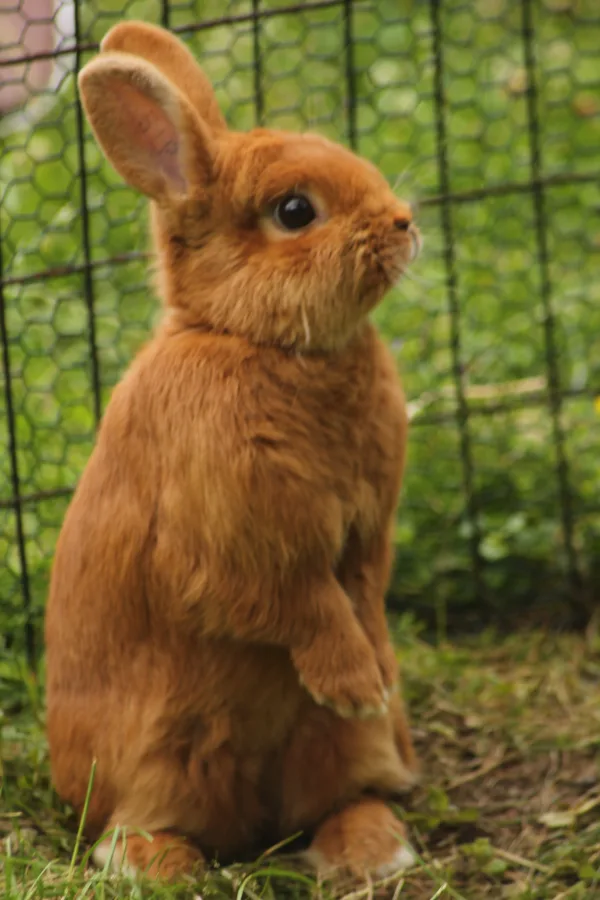
The January 2026 ARBA guide lists one Standard showroom and registration variety in four classes. ARBA publishes a 6 lb (2.72 kg) maximum. Club judging guidance calls for a short, compact, well-rounded body; a short full head; sound bone; and dense, softly textured rollback fur ideally about one inch long. Color should be bright, clean and red across the body. The belly, eye circles and underside of the tail may be a slightly lighter red, but fawn, agouti banding or white are not the target. Historical guidance relates the color to tan/agouti rather than self patterning. That explanation aids selection but does not prove an individual genotype without pedigree or testing.
Coat color and history do not predict personality
No cited standard or controlled behavioral study demonstrates that every Thrianta is calm, friendly, hardy or easy to handle. Assess pain, fear, hormones, social history and individual responses. Provide predictable routines, secure hides, foraging, room for several full hops, running, upright standing, stretching and withdrawal, plus compatible rabbit companionship. Interact on the floor with rewards and allow retreat. Support the chest and complete hindquarters when lifting; never use the ears or loose skin. A sudden behavior change can be an early health sign.
Compact does not mean low-space or low-care
Use a permanently connected living and exercise area that allows normal movement, with dry, stable, non-slip flooring, comfortable rest surfaces and shelters. Feed unlimited grass hay and constant fresh water, suitable leafy greens and a measured complete pellet adjusted for age, body condition and reproduction. Gently groom rollback fur during moults and inspect the belly, tail underside and feet; pale red may be normal color, but hair loss, scale, urine staining or wounds are not. Track weight, appetite, feces, teeth, nails, soles, skin, coat and movement.
Red color is not evidence of special hardiness
The reviewed evidence does not identify a Thrianta-specific disease caused by the desired red coat, nor does it prove special immunity. Pigment sources describe color pathways, not health certification. Reduced eating or feces, drooling, weight loss, diarrhea, swelling, breathing difficulty, head tilt, urine scald, sore feet, pain, weakness or lethargy require prompt rabbit-experienced veterinary assessment. Use quarantine and full treatment records. Select functional heads, sound feet and stable body condition instead of intensifying color at the expense of welfare.
Protect the single variety with records, not production promises
Use the current ARBA standard and verified pedigrees. Record mature weight under 6 lb, compact type, head, ears, bone, feet, bite, one-inch rollback coat, brightness and evenness of red, belly and tail color, eye color, examinations, matings, every birth and loss, growth and doe recovery. Distinguish Thrianta from the larger German Sachsengold and from red New Zealand or mixed rabbits. Club material says the US foundation came from limited imports and describes large litters as easy, but it supplies no controlled rate; the database’s fixed five-kit average is not a promise. Manage diversity and health alongside color.
- Verify pedigree and distinguish Thrianta from Sachsengold and red crosses.
- Record weight, compact type, rollback fur and complete red color.
- Track every mating, birth, loss, growth result and doe recovery.
Frequently asked questions
Where did the Thrianta rabbit originate?
The detailed national-club history places it in Drenthe, Netherlands, under H. Andreae from 1938. The Dutch standard admitted it on May 1, 1940.
How much does a Thrianta rabbit weigh?
ARBA publishes a maximum of 6 lb, about 2.72 kg. Exact age-class requirements belong to the current Standard of Perfection.
Which Thrianta colors are recognized?
The January 2026 ARBA guide lists one Standard variety. The target is brilliant red; a slightly lighter red underside is part of the same variety.
Is Thrianta the same as Sachsengold?
No. Their histories became intertwined during postwar recovery, but the specialty-club record treats them as distinct populations with different size and color goals.
- Breed standardAmerican Rabbit Breeders Association — Thrianta
- Breed standardARBA — Breed ID Guide, updated January 2026
- Breed standardAmerican Thrianta Rabbit Breeders Association — History of the Thrianta
- Breed standardAmerican Thrianta Rabbit Breeders Association — Thrianta Information
- Breed standardAmerican Thrianta Rabbit Breeders Association — The Netherlands
- UniversityOregon State University Extension — Rabbit coat color genetics summary
- Peer reviewedApplied Sciences — The Genetic Resources of Domestic Rabbits
- Animal welfareARBA — Recommendations for the Care of Rabbits and Cavies
- VeterinaryMSD Veterinary Manual — Noninfectious Diseases of Rabbits
- Animal welfareRSPCA — What should I feed my rabbits?
- Animal welfareRSPCA — How to keep rabbits healthy
- Animal welfareRSPCA — The ideal home for rabbits
- VeterinaryMSD Veterinary Manual — Management of Rabbits
- VeterinaryMSD Veterinary Manual — Nutrition of Rabbits
- VeterinaryMSD Veterinary Manual — Routine Health Care of Rabbits
This profile does not replace the current ARBA Standard of Perfection, authenticate breed or genotype from red color, predict litter size or diagnose disease. Use complete records and a rabbit-experienced veterinarian.