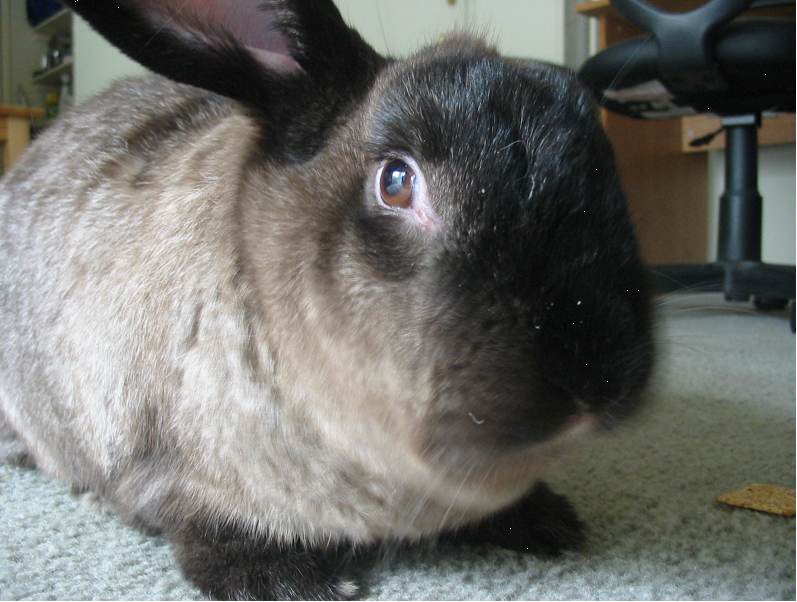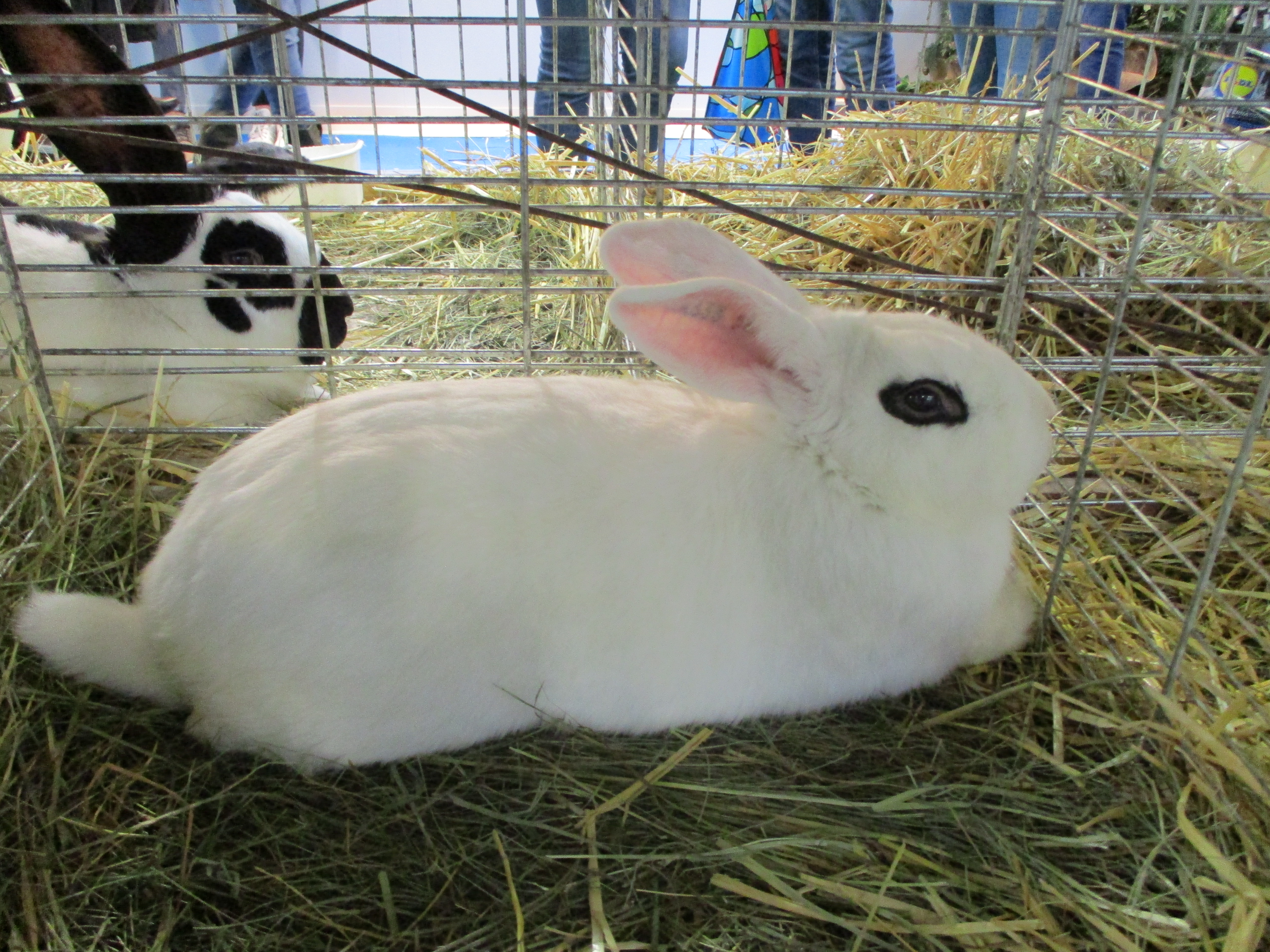

A domestic rabbit selected for a hare-like silhouette
The club history describes early leporine rabbits developed in Flanders from domestic and wild European rabbits—both Oryctolagus cuniculus, not true hares. Stock reached Britain from Belgium and Germany in the 1870s, where breeders selected a longer, racier animal resembling the English wild hare. Standards were written in 1882 and revised in 1889; the first recorded US import followed in 1888. Historical heavyweight lines and the commercial ‘Belgian Hare boom’ should not be confused with the fine modern exhibition type.
Full arch, long limbs and wavy black ticking
The breed club describes a long, fine body, muscular flank, arched back and rounded hindquarters; the rabbit is evaluated posed high enough to reveal its full arch and long limbs. The traditional Rufus variety is deep red with black ticking distributed in waves. The club also reports a newly approved Tan variety in black, blue, chocolate and lilac with tan patterning, so exhibitors must check the current class list. ARBA’s public maximum is 4.31 kg; the FFC’s 3.5–4.25 kg is a separate French ideal.
An alert reputation is not a promise about every rabbit
Belgian Hares are commonly described by the club as active and alert, but breed name cannot predict an individual’s tolerance of handling. Watch posture, appetite, pain and fear; introduce handling gradually with rewards and always support the long body and hindquarters. A tall pose on a show table does not replace daily space to run, turn, stand, stretch, hide and rest with a compatible companion.
Prioritize safe movement, grip and lean body condition
A long-limbed, fine-boned rabbit needs a dry, non-slip resting surface and enough uninterrupted space for normal locomotion. Inspect nails, toes, soles and hocks, and remove hazards that could catch a limb. Provide unlimited grass hay and fresh water, appropriate leafy greens and measured complete pellets. Assess ribs, spine and hindquarters by touch; neither the ARBA maximum nor the FFC ideal is a feeding goal for every animal.
Racy conformation does not create a unique disease list
No reliable source supports assigning a fixed set of diseases to every Belgian Hare. Monitor appetite, faecal output, weight and body condition, teeth, breathing, eyes, nose, skin, feet and gait. Reduced eating or droppings, abdominal swelling, severe pain, breathing difficulty, weakness or a sudden gait change needs prompt assessment by a rabbit-experienced veterinarian.
Select sound type without repeating production folklore
Confirm pedigree because a red, slender rabbit is not automatically a Belgian Hare. Record mature weight under the relevant regional standard, full-arch structure, limb and foot soundness, color and ticking, teeth, recurring illness, behaviour, matings, kindlings, kit survival and doe recovery. The club’s history warns that past heavyweight selection changed the breed’s purpose. No standard guarantees six kits, 14-week slaughter, a fixed carcass yield or easy breeding.
- Record the animal as a domestic rabbit, never as a rabbit–hare hybrid.
- Use ARBA and FFC weights only within their regional standards.
- Balance full-arch type, sound feet, health and genetic diversity.
Frequently asked questions
Is a Belgian Hare actually a hare?
No. It is a domestic European rabbit selected to resemble a hare; there is no documented Lepus ancestry.
How much does a Belgian Hare weigh?
ARBA publishes a 4.31 kg maximum. The French FFC gives a separate ideal range of 3.5–4.25 kg.
When was the Belgian Hare standardized?
The American breed club records a first written standard in 1882 and a racier revision in 1889.
What does a Belgian Hare look like?
It has a long, fine full-arch body, long limbs and, in the traditional Rufus variety, deep red color with wavy black ticking.
- Breed standardAmerican Rabbit Breeders Association — Belgian Hare
- Breed standardAmerican Belgian Hare Club — Belgian Hare History
- Breed standardAmerican Belgian Hare Club — Belgian Hare
- Breed standardFédération Française de Cuniculiculture — Lièvre Belge
- VeterinaryMSD Veterinary Manual — Noninfectious Diseases of Rabbits
- Animal welfareRSPCA — What should I feed my rabbits?
- Animal welfareRSPCA — How to keep rabbits healthy
- Animal welfareRSPCA — The ideal home for rabbits
- VeterinaryMSD Veterinary Manual — Management of Rabbits
- VeterinaryMSD Veterinary Manual — Nutrition of Rabbits
- VeterinaryMSD Veterinary Manual — Routine Health Care of Rabbits
This profile does not diagnose an animal or replace the current ARBA or national standard. Confirm show classes locally and health decisions with a rabbit-experienced veterinarian.