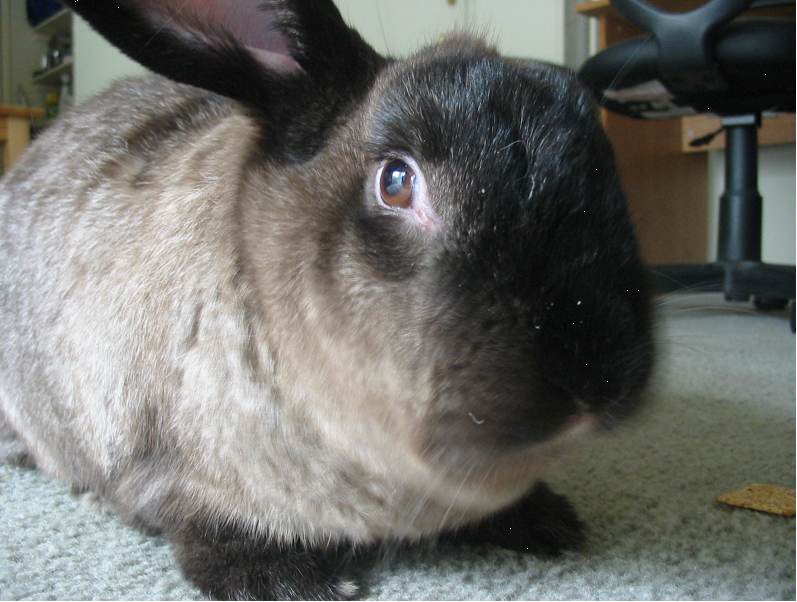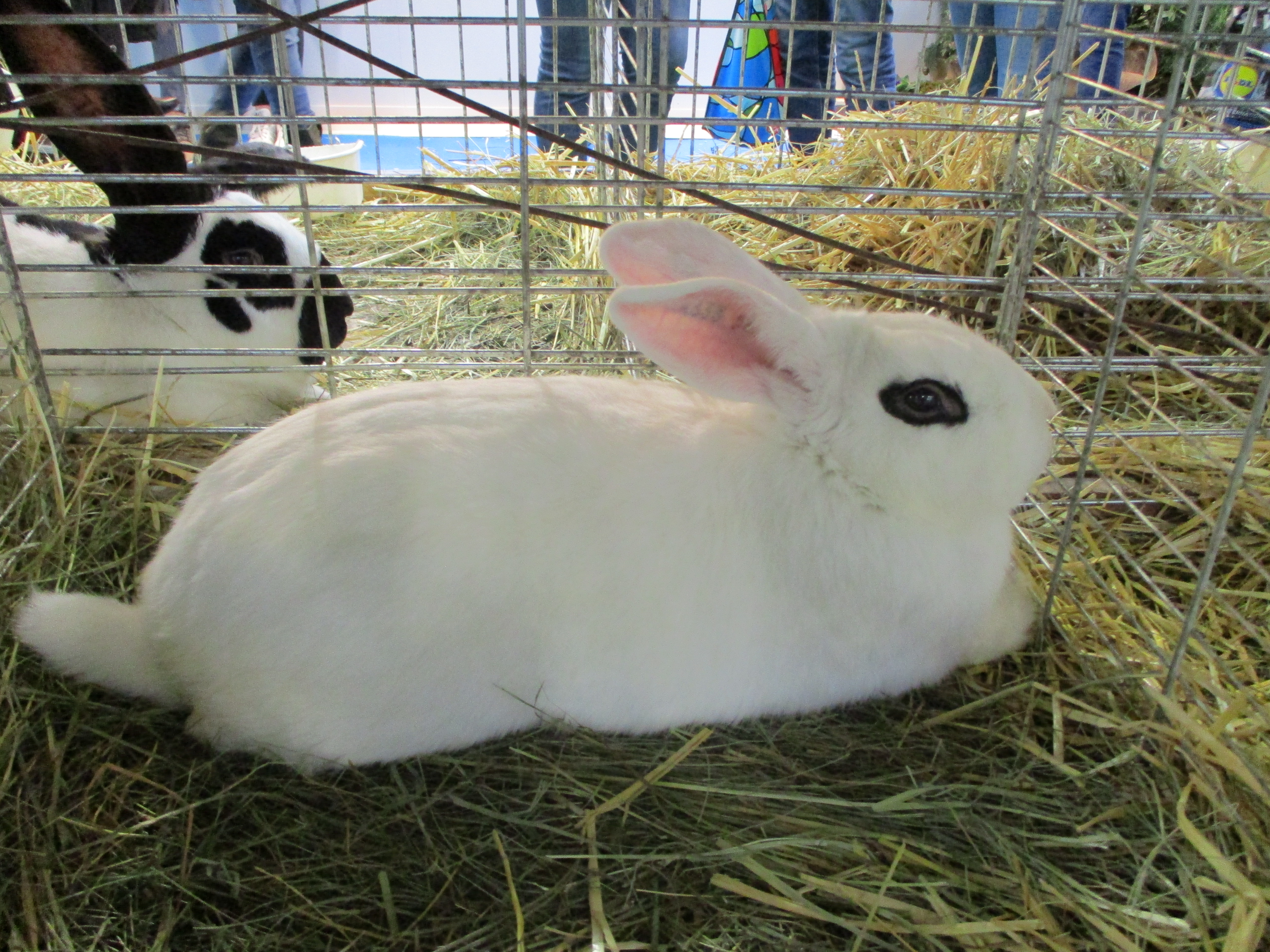

A woolled Holland-type rabbit and two recognition dates
AFLRC traces the breed to wool genes introduced while breeders worked with Holland Lops, English Spots and French Angoras. Patty Greene-Karl developed the fuzzy offspring as a distinct breed, first presenting them in 1985; after a failed third showing in 1987 and a revised standard, the 1988 Madison presentation passed. ARBA’s current summary says 1989, when AFLRC records the first Convention Best of Breed. This unresolved one-year difference is preserved with source labels.
Compact lop type, broad head and dense wool
ARBA identifies lopped ears, a large head and a wooled coat. AFLRC describes a short, compact body, thick ears set close to the eyes and dense, manageable wool at least 2 in (5.08 cm) long, with a maximum of 1.81 kg. FGF5 research supports the biological basis of long hair in Angora-derived rabbits, but coat, head shape or a generated image cannot establish pedigree.
A breed reputation is not a behaviour guarantee
ARBA calls the breed sweet-tempered and energetic, but that is a registry description, not a prediction for every animal. Observe the individual’s response to people, grooming, noise and other rabbits. Use reward-based habituation and provide room to run, stand, hide, rest and interact with a compatible rabbit; handling tolerance should be taught, never assumed.
Short wool still needs a skin-level routine
Check behind the ears, under the chin, armpits, groin, tail and feet to the skin; loosen small tangles before they become tight mats and record how quickly they recur. Unlimited grass hay and fresh water support normal gut function, with suitable leafy greens and measured complete pellets. Coat care must follow the rabbit in front of you rather than the claim that this wool is universally easy.
Hidden skin damage, dental pain and gut slowdown
Dense wool can hide wounds, parasites, urine scald, sore feet, body-condition loss and flystrike risk. MSD explains that swallowed hair normally moves through the gut; reduced fibre intake, pain and reduced eating are important contributors to gastrointestinal stasis. Less appetite or faeces, abdominal swelling, obvious pain or lethargy warrants prompt assessment by a rabbit-experienced veterinarian.
Select a manageable coat without losing welfare
Use verified pedigrees and the current governing standard; do not identify breeding stock by appearance alone. Record adult weight, body condition, dental and foot health, skin lesions, mat frequency, grooming time, handling response, pedigrees, matings, kindlings, kit survival and doe recovery. Select compact type and useful wool only alongside sound health, and never promise a fixed litter size or temperament.
- Label the 1988 AFLRC and 1989 ARBA dates instead of merging them.
- Keep the 1.81 kg maximum distinct from the 1.59 kg ideal.
- Do not breed unexplained dental, skin, foot or digestive problems.
Frequently asked questions
How much does an American Fuzzy Lop weigh?
The current maximum is 4 lb (1.81 kg); AFLRC’s revised historical ideal is 3.5 lb (1.59 kg).
Was the American Fuzzy Lop recognized in 1988 or 1989?
AFLRC records the successful recognition presentation in 1988, while ARBA’s current breed page says 1989. This guide reports both source-specific dates.
Is American Fuzzy Lop wool maintenance-free?
No. The coat was selected to be manageable, but it still needs individual skin-level checks and timely tangle removal.
Is the breed always calm and friendly?
No. ARBA describes a general reputation, while behaviour depends on the individual, health, socialisation and handling.
- Breed standardAmerican Rabbit Breeders Association — American Fuzzy Lop
- Breed standardAmerican Fuzzy Lop Rabbit Club — History of the AFL
- Breed standardAmerican Fuzzy Lop Rabbit Club — Standard of Perfection
- Peer reviewedBMC Genomics — FGF5 mutation and the long-hair trait in Angora rabbits (2023)
- VeterinaryMSD Veterinary Manual — Noninfectious Diseases of Rabbits
- Animal welfareRSPCA — What should I feed my rabbits?
- Animal welfareRSPCA — How to keep rabbits healthy
- Animal welfareRSPCA — The ideal home for rabbits
- VeterinaryMSD Veterinary Manual — Management of Rabbits
- VeterinaryMSD Veterinary Manual — Nutrition of Rabbits
- VeterinaryMSD Veterinary Manual — Routine Health Care of Rabbits
This profile does not diagnose an individual rabbit or replace the current ARBA standard. Ask a rabbit-experienced veterinarian about coat, skin, dental or digestive concerns.