Eugénie Bernhard selected white from marked French rabbits
FFC records Bernhard’s aim of a white, dark-eyed rabbit in Hotot-en-Auge. Early crosses between French Papillon and white breeds produced mixed marked offspring; on J. Lemarié’s advice, she then worked within French Papillon stock, repeatedly retaining the least-marked animals. Desired characteristics were present by about 1912. The breed appeared in Paris in 1920 as Géant Blanc de Hotot and received its French standard in 1922. Notably, the first standard mentioned dark eyelashes and lower eyelids, not today’s deliberate black spectacles.
Snow-white frosted sheen and precise black spectacles
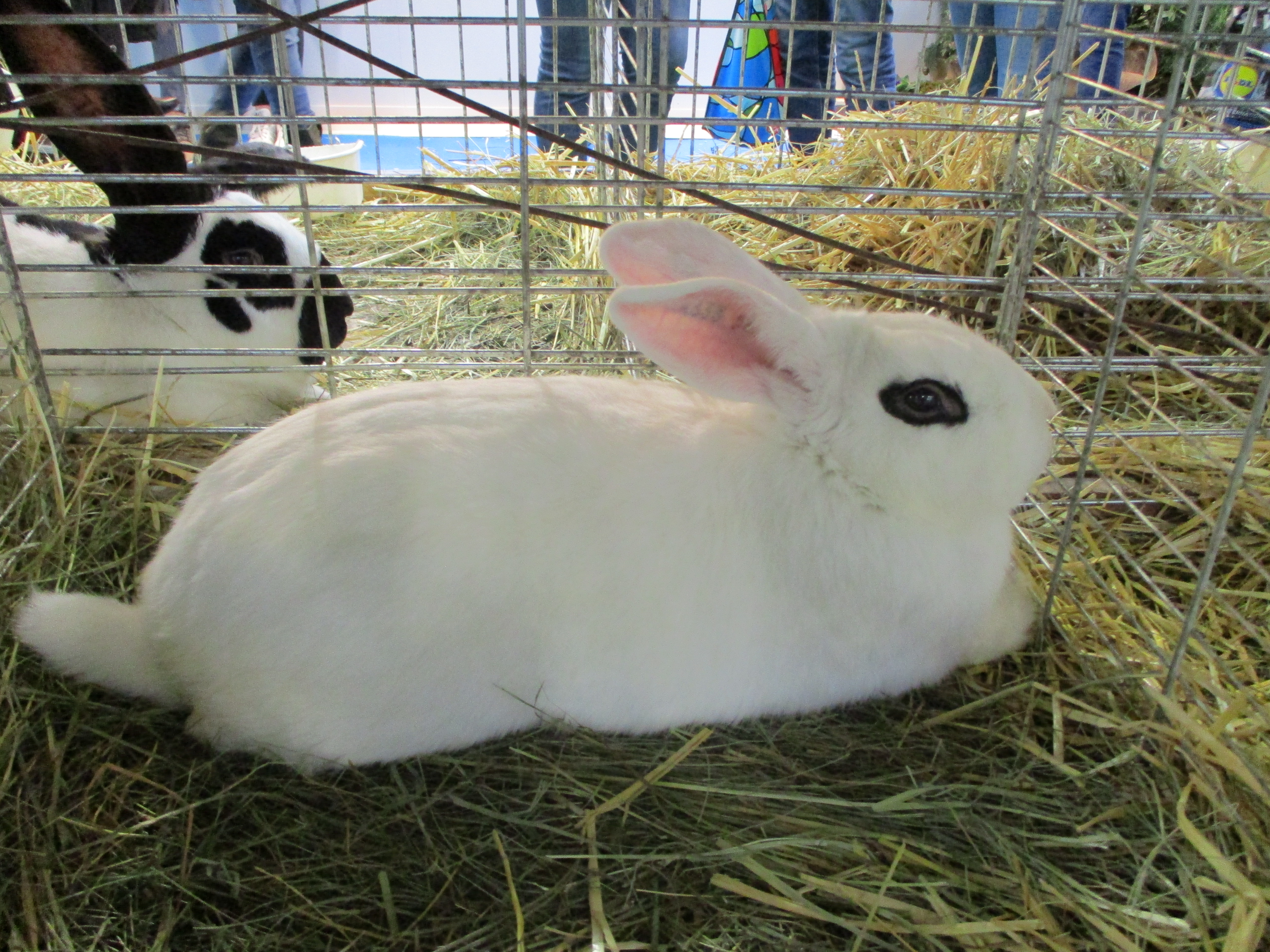
FFC calls for a robust, rounded body with a gently arched topline, full rump and filled thighs, plus upright, sturdy ears. The dense, fine, glossy coat has prominent guard hairs that create its characteristic frosted-white sheen. A regular black 3–5 mm hair band surrounds each eye in the French standard; US conservation guidance reports an ARBA limit around 1/8 inch (3.2 mm). ARBA’s public maximum is 4.99 kg, while FFC’s ideal is 4.0–4.75 kg. Weight and dark eyes distinguish it from Dwarf Hotot only in combination with pedigree and type.
Docile and active are population descriptions, not guarantees
The Livestock Conservancy describes a docile-to-active reputation, but no breed label predicts every rabbit’s response. Assess pain, fear, previous handling and interactions with people and rabbits. Use gradual reward-based habituation, support the large body and hindquarters, and provide continuous space to run, stand, stretch, hide and rest with a compatible companion.
Keep the frosted white coat clean without overgrooming
The coat is normal fur, not wool, but its white sheen makes dirt and urine staining visible and dense guard hair can hide skin changes. Keep resting areas dry, remove loose hair during moulting and inspect skin, underside, tail, feet and hocks. Provide unlimited grass hay and fresh water, suitable leafy greens and measured complete pellets. Assess ribs, spine and rump by touch instead of feeding every animal to the 4.99 kg maximum.
Eye markings are not an eye diagnosis
The black spectacle is a coat marking around a normally pigmented eye, not evidence of a disease or proof of visual impairment. Reliable sources do not establish a unique Blanc de Hotot disease list. Monitor appetite, faeces, weight, teeth, breathing, eyes and discharge, nose, skin, urine staining, feet and movement. Reduced eating or droppings, abdominal swelling, severe pain, breathing difficulty or marked lethargy needs prompt rabbit-experienced veterinary care.
Select markings without sacrificing body, health or diversity
Verify pedigree because eye bands also occur in Dwarf Hotot and mismarked crosses. Record mature sex-specific weight in the relevant standard, rounded body and rump, coat sheen, eye-band width and continuity, stray body color, eyes, teeth, feet, recurring illness, matings, kindlings, kit survival and doe recovery. The breed’s documented bottlenecks and later North American outcrosses make relatedness records important. A standard does not guarantee seven kits, 12-week slaughter, 56% yield or a particular temperament.
- Keep the 1922 French and 1979 ARBA milestones distinct.
- Measure eye bands under the registry used for exhibition.
- Balance markings, body, health and traceable genetic diversity.
Frequently asked questions
How much does a Blanc de Hotot weigh?
ARBA publishes a 4.99 kg maximum. FFC’s current French ideal is 4.0–4.75 kg; US conservation data list sex-specific 3.63–4.99 kg ranges.
Is Blanc de Hotot the same as Dwarf Hotot?
No. Blanc de Hotot is a large French breed; Dwarf Hotot is a separate much smaller breed with its own history and standard.
How wide should the black eye bands be?
FFC currently specifies about 3–5 mm. US guidance reports a narrower ARBA limit around 1/8 inch, so use the relevant registry.
Was the old database photo correct?
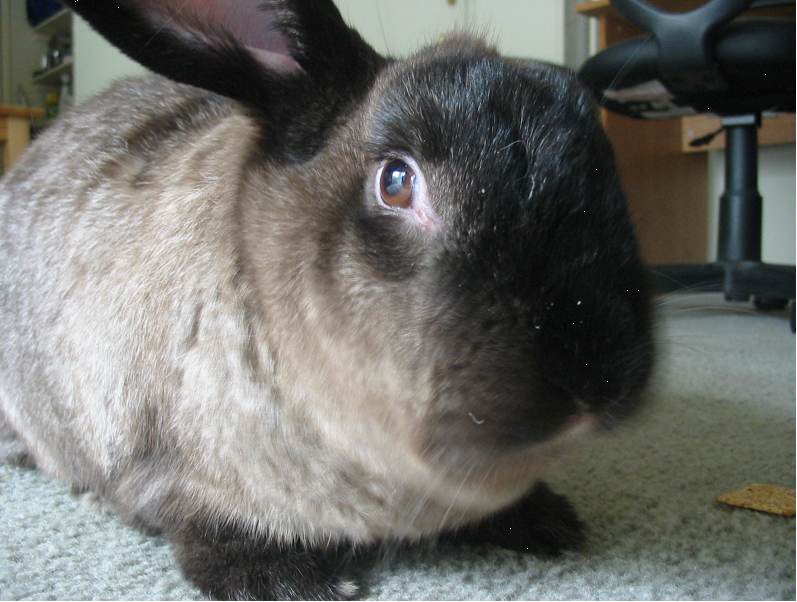
No. Its source identifies a Dwarf Hotot with head tilt. This profile uses a licensed Blanc de Hotot photographed at the 2019 Paris agricultural show.
- Breed standardFédération Française de Cuniculiculture — Blanc de Hotot (2026)
- Breed standardAmerican Rabbit Breeders Association — Blanc de Hotot
- Breed standardHotot Rabbit Breeders International — History of the Hotot
- Breed standardThe Livestock Conservancy — Blanc de Hotot Rabbit
- VeterinaryMSD Veterinary Manual — Noninfectious Diseases of Rabbits
- Animal welfareRSPCA — What should I feed my rabbits?
- Animal welfareRSPCA — How to keep rabbits healthy
- Animal welfareRSPCA — The ideal home for rabbits
- VeterinaryMSD Veterinary Manual — Management of Rabbits
- VeterinaryMSD Veterinary Manual — Nutrition of Rabbits
- VeterinaryMSD Veterinary Manual — Routine Health Care of Rabbits
This profile does not diagnose an animal or replace the current ARBA, FFC or national standard. Confirm show requirements locally and health decisions with a rabbit-experienced veterinarian.