
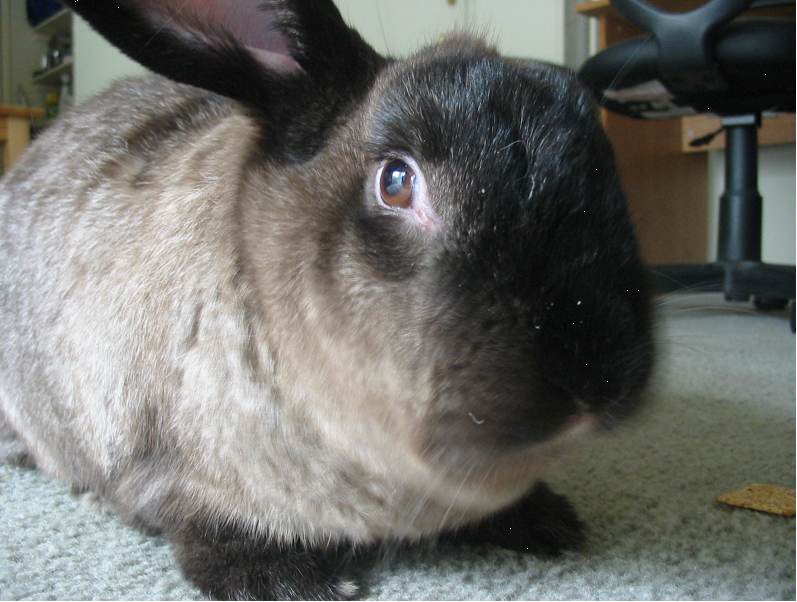
A 1924 Chinchilla throwback and a documented recovery
The peer-reviewed history credits Otto Brock of San Gabriel with brown kits found in purebred Chinchilla stock in 1924; Havana was later used by some early breeders to intensify brown. The first association formed and adopted a working standard in 1929, followed by ARBA recognition in 1931. Only one animal appeared at the 1981 Convention; Al Roerdanz gathered seven remaining animals, used recorded outcrosses and helped form today’s American Sable Rabbit Society in 1982.
Dark sepia points fading into a lighter body
ARBA describes a luxurious brown coat: dark sepia over the top and on the face, ears, feet and tail, shading to lighter sepia on the sides. The scholarly review explains sable as a pigment phenotype and records historical weights, but color expression alone cannot verify breed identity. ARBA’s current public maximum is 4.08 kg; exhibitors should consult the current complete Standard of Perfection rather than rely on the historical 3.18–4.54 kg range.
Color and breed name do not predict behaviour
No strong primary source establishes one temperament for every American Sable. Assess the individual’s pain, fear, prior handling and response to people and other rabbits. Use gradual reward-based habituation, support the body securely and provide room to run, stand, stretch, hide and rest with a compatible rabbit.
A normal coat still needs routine inspection
American Sables do not have wool, so claims of universally high-maintenance fur are misleading. Brush loose hair as needed during moulting and inspect skin, feet, underside, eyes, nose and coat condition. Provide unlimited grass hay and fresh water, appropriate leafy greens and measured complete pellets. Track body condition by touch rather than feeding to a show maximum.
No evidence for a unique American Sable disease list
Reliable sources do not support inventing breed-specific illnesses from color or show faults. Monitor appetite, faeces, weight and condition, teeth, breathing, eyes, nose, skin, urine staining and feet. Reduced eating or droppings, abdominal swelling, severe pain, breathing difficulty or lethargy requires prompt care from a rabbit-experienced veterinarian.
Preserve traceable diversity as well as sepia shading
The documented 1980s recovery makes pedigrees and population diversity especially relevant. Verify ancestry; a sable-colored rabbit may belong to another breed or be a cross. Record mature weight under the current standard, body structure, shade and transition, coat, teeth, feet, recurring disease, behaviour, matings, kindlings, kit survival and doe recovery. Do not promise six kits, 12-week slaughter or 56% yield from a breed label.
- Label current ARBA and historical 1955 weight figures separately.
- Use pedigree and conformation, not sepia color alone, for identity.
- Track relatedness and health alongside shading and body type.
Frequently asked questions
How much does an American Sable weigh?
ARBA’s public page currently states a 9 lb (4.08 kg) maximum. A scholarly review reports a historical 1955 range of 7–10 lb (3.18–4.54 kg).
When was the American Sable recognized?
Brown kits were documented in 1924, a working standard was adopted in 1929 and ARBA recognized the breed in 1931.
What color is an American Sable?
Dark sepia on the face, ears, feet, back and upper tail blends into a lighter sepia body.
Is every sable-colored rabbit an American Sable?
No. Sable is also a color phenotype in other breeds and crosses; pedigree and conformation are needed.
- Breed standardAmerican Rabbit Breeders Association — American Sable
- Peer reviewedAnnals of Animal Science — Sable rabbits: characteristics and breed history (2023)
- Breed standardAmerican Rabbit Breeders Association — National Specialty Clubs
- VeterinaryMSD Veterinary Manual — Noninfectious Diseases of Rabbits
- Animal welfareRSPCA — What should I feed my rabbits?
- Animal welfareRSPCA — How to keep rabbits healthy
- Animal welfareRSPCA — The ideal home for rabbits
- VeterinaryMSD Veterinary Manual — Management of Rabbits
- VeterinaryMSD Veterinary Manual — Nutrition of Rabbits
- VeterinaryMSD Veterinary Manual — Routine Health Care of Rabbits
This profile does not diagnose an animal or replace the current ARBA Standard of Perfection. Confirm show classes with ARBA and health decisions with a rabbit-experienced veterinarian.


