An Ohio breed from the 1920s with an uncertain recipe
ARBA, the specialty club and The Livestock Conservancy agree that Walter B. Garland developed Silver Fox around North Canton, Ohio, in the 1920s. The standard was accepted in 1925 under American Heavyweight Silver and the present name followed in 1929. The exact ancestry is not settled: the club gives a detailed Checkered Giant and English Silver account, while The Livestock Conservancy says Garland never divulged the formula and lists Checkered Giant, Champagne d’Argent and perhaps American Blue as possibilities. This profile therefore records the secure history without turning a reconstruction into fact. The breed graduated from the Conservancy list in 2026.
A 12 lb six-class breed with a standing silvered coat
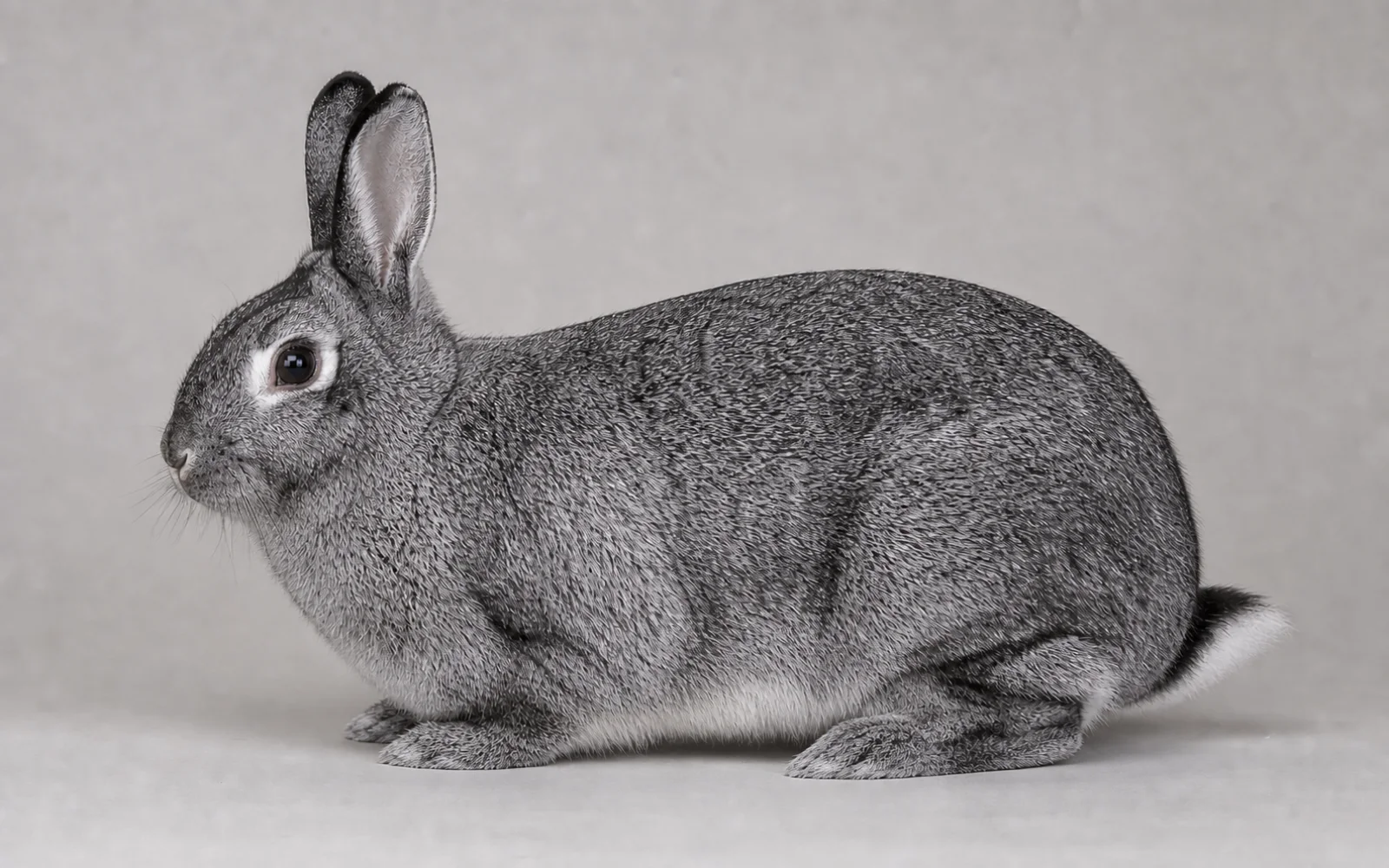
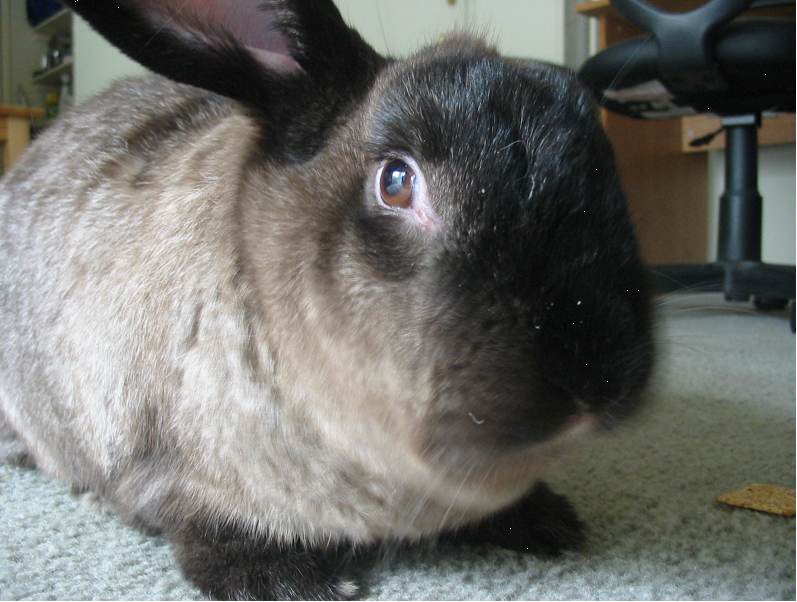
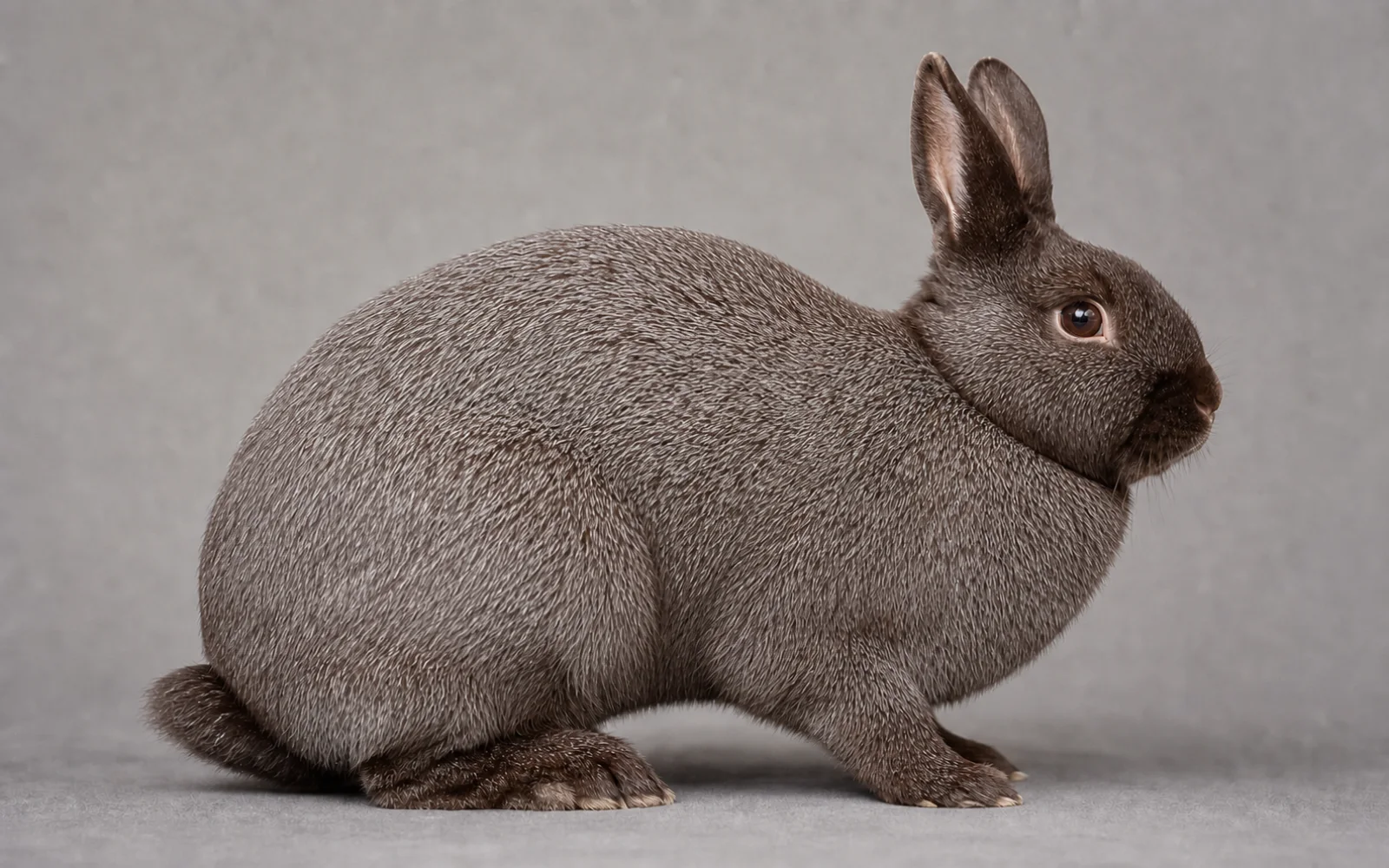
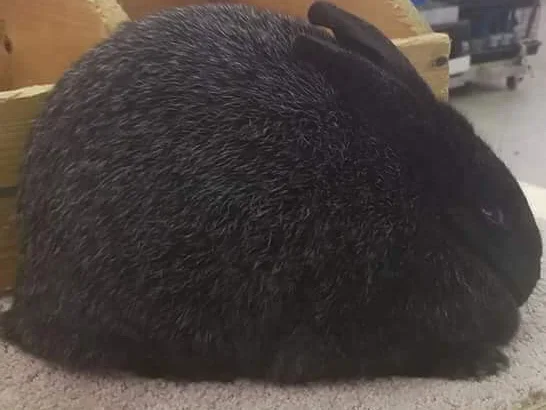
The January 2026 ARBA guide recognizes Black and Chocolate for exhibition and registration. ARBA sets a 12 lb (5.44 kg) maximum; The Livestock Conservancy gives sex-specific upper weights of 11 lb (4.99 kg) for bucks and 12 lb for does. The dense coat is about 1.5–2 inches and is distinctive because it remains upright when stroked from tail to head. Young are born solid, then white hairs appear through the coat. Blue has a working standard for exhibition only and cannot win BOB or BIS; White is not a recognized variety. Silvering does not by itself establish breed identity, pedigree or a known causal DNA variant.
Breed reputation does not predict every individual
Historical and conservation profiles describe useful maternal and manageable qualities, but no controlled study proves that every Silver Fox is calm, friendly or suitable for children. Behavior depends on health, hormones, early experience, housing and handling. Provide hiding places, foraging, predictable routines, substantial exercise space and a compatible rabbit companion. Interact at floor level and reward voluntary contact. Never lift by ears or loose skin; support the chest and the whole hindquarters. A sudden change in posture, appetite, activity or sociability can signal pain or stress.
Large body and unusual fur require room and observation
Use permanently connected living and exercise areas that allow several full hops, upright standing, stretching, turning, running and retreat. Floors should be dry, stable and non-slip with a comfortable resting surface. Feed unlimited grass hay and constant fresh water, appropriate leafy greens and a measured complete pellet adjusted for age, body condition and reproduction. During moults, groom gently and separate normal loose coat from mats, scale, wounds or parasites. Record weight and body condition; check appetite, feces, teeth, nails, soles, skin, coat and movement instead of treating heavy weight or thick fur as proof of health.
Silvering and standing coat are not health guarantees
A genomic survey discusses hereditary silvering in rabbits but does not establish a Silver Fox-specific disease or a confirmed causal variant for this breed’s complete coat phenotype. The absence of one proven breed-linked disorder is not evidence of exceptional hardiness. Reduced eating or feces, drooling, weight loss, diarrhea, abdominal swelling, breathing difficulty, head tilt, urine scald, sore feet, skin lesions or lethargy require prompt rabbit-experienced veterinary assessment. Protect a breeding population with quarantine, vaccination appropriate to region, hygiene and complete medical records.
Select documented health and type, not production promises
Use the current ARBA standard and record exact Black or Chocolate identity, pedigree, mature weight, commercial body structure, coat length and stand-up response, silver distribution, feet, bite, examinations, matings, every birth and loss, growth and doe recovery. Photograph silvering at fixed ages and under consistent light. Blue animals belong to a working-standard program and are not a third fully recognized variety. Historic breed promotion cites six-to-eight young, strong mothering and a 65% dressed yield, but these are not controlled universal guarantees. The sources do not validate a fixed 7–9 litter, 60% yield, 12-week processing target or temperament outcome.
- Record recognized variety, pedigree, weight, structure and coat response.
- Photograph silvering over time and record every birth and loss.
- Do not market historical production figures as guaranteed outcomes.
Frequently asked questions
How much does a Silver Fox rabbit weigh?
ARBA sets a 12 lb maximum, about 5.44 kg. The Livestock Conservancy gives upper weights of 11 lb for bucks and 12 lb for does.
Which Silver Fox colors are recognized?
The January 2026 ARBA guide recognizes Black and Chocolate. Blue is exhibition-only under a working standard; White is not accepted.
When did the Silver Fox breed originate?
Walter B. Garland developed it in Ohio in the 1920s. Its standard was approved as American Heavyweight Silver in 1925 and the name changed in 1929.
Is Silver Fox still a rare conservation breed?
Older pages may say Recovering, but The Livestock Conservancy moved Silver Fox to Graduate status in 2026.
- Breed standardAmerican Rabbit Breeders Association — Silver Fox
- Breed standardNational Silver Fox Rabbit Club — Club History
- Breed standardThe Livestock Conservancy — Silver Fox Rabbit (Graduate 2026)
- Breed standardARBA — Breed ID Guide, updated January 2026
- Breed standardARBA Standards Committee — Blue Silver Fox working standard
- Peer reviewedBMC Genomics — Genomic diversity and selection in meat and fancy rabbit breeds
- Breed standardWikimedia Commons — Documented Silver Fox rabbit photograph
- Animal welfareARBA — Recommendations for the Care of Rabbits and Cavies
- VeterinaryMSD Veterinary Manual — Noninfectious Diseases of Rabbits
- Animal welfareRSPCA — What should I feed my rabbits?
- Animal welfareRSPCA — How to keep rabbits healthy
- Animal welfareRSPCA — The ideal home for rabbits
- VeterinaryMSD Veterinary Manual — Management of Rabbits
- VeterinaryMSD Veterinary Manual — Nutrition of Rabbits
- VeterinaryMSD Veterinary Manual — Routine Health Care of Rabbits
This profile does not replace the current ARBA Standard of Perfection, authenticate pedigree, predict silvering or guarantee production. Use complete records and a rabbit-experienced veterinarian.