
A 1917 debut, a 1918 standard and uncertain ancestry
The breed club identifies Lewis H. Salisbury of Pasadena, California, as the breeder who first exhibited the Slate Blue rabbit in Los Angeles in 1917 and presented it for acceptance later that year. The first standard was published in March 1918. White entered the standard in 1925. The club also stresses that the exact crosses behind both varieties remain uncertain, so confident ancestry formulas found in secondary summaries should not be repeated.
Semi-arch body, flyback coat and two recognized colors
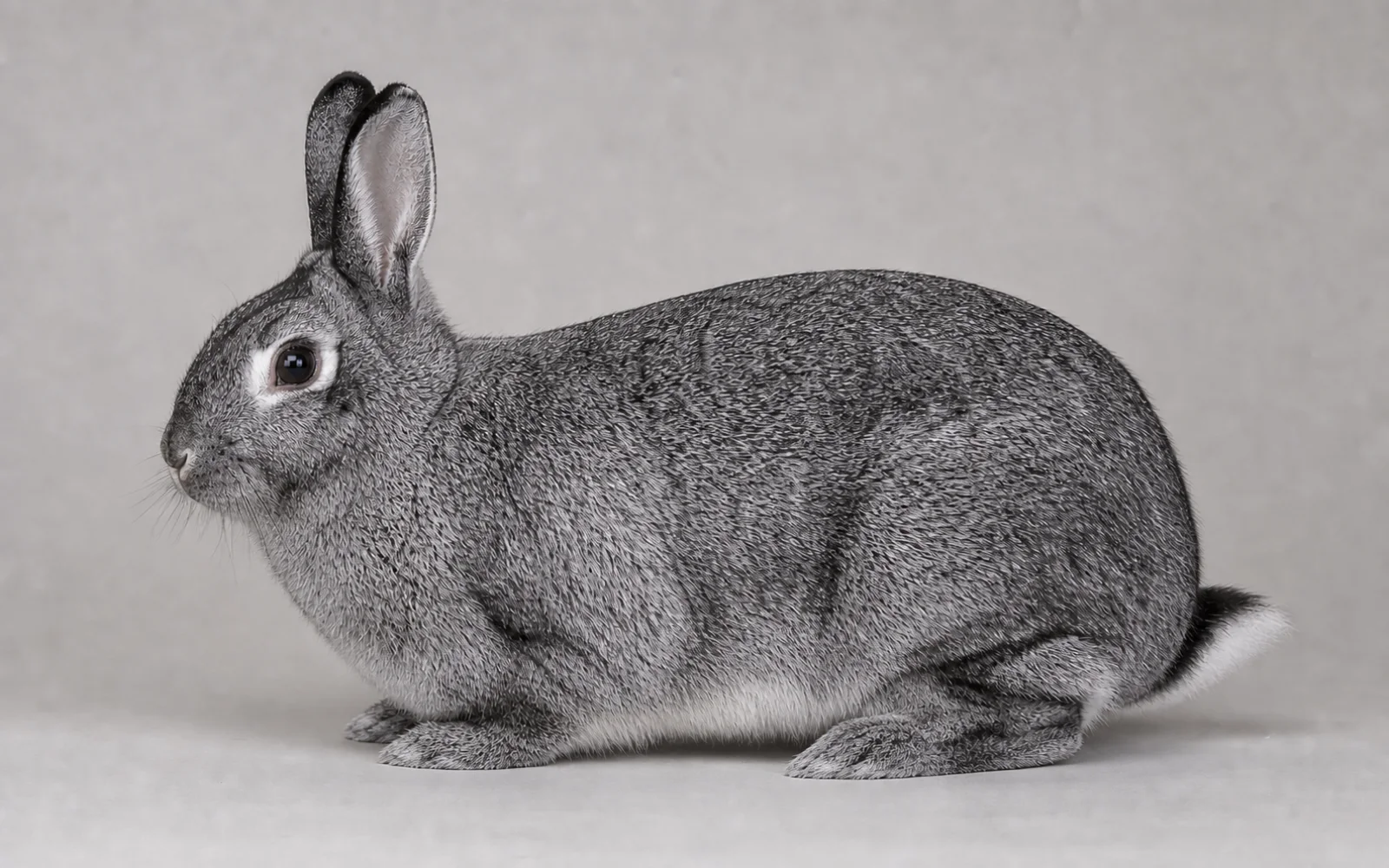
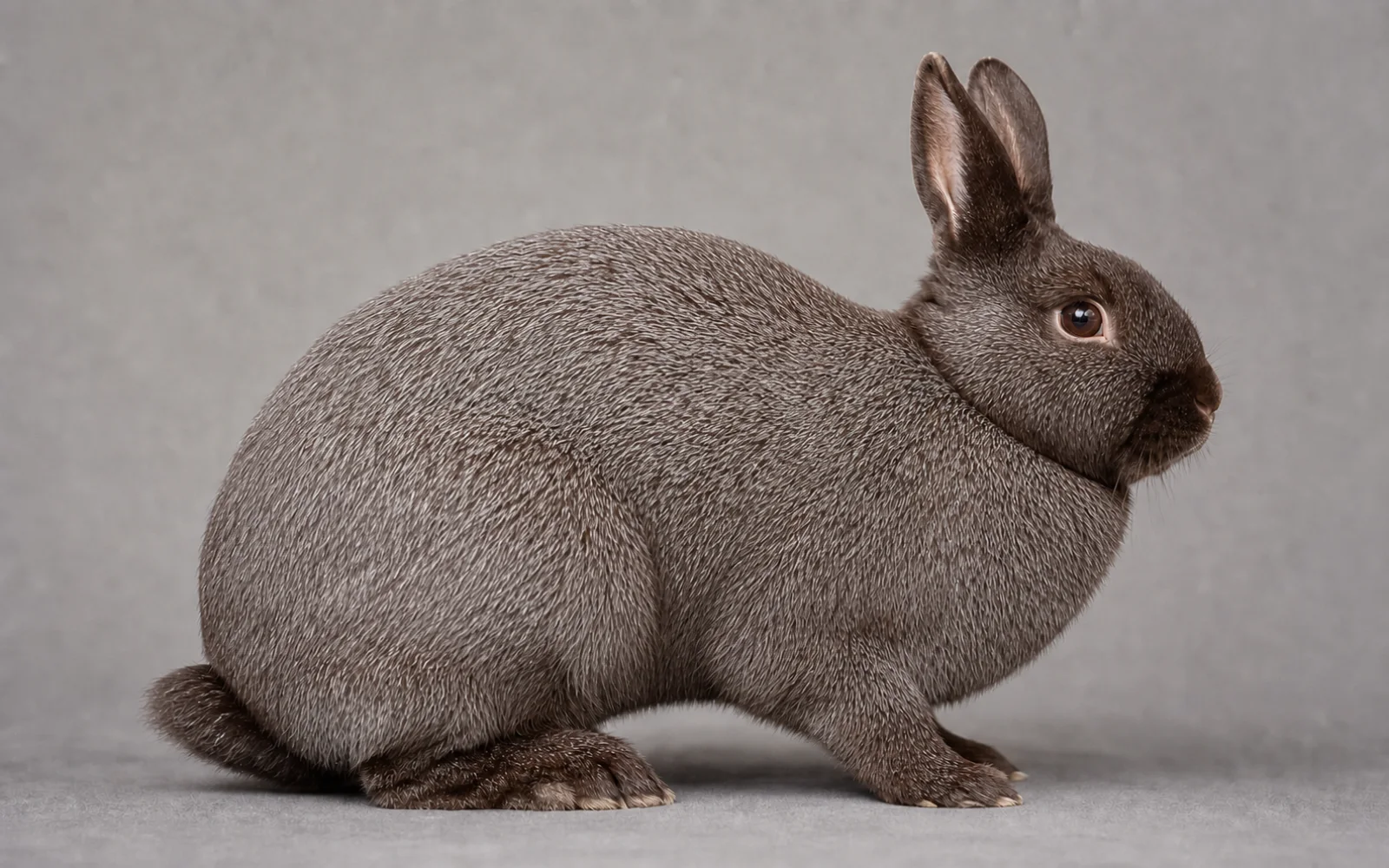
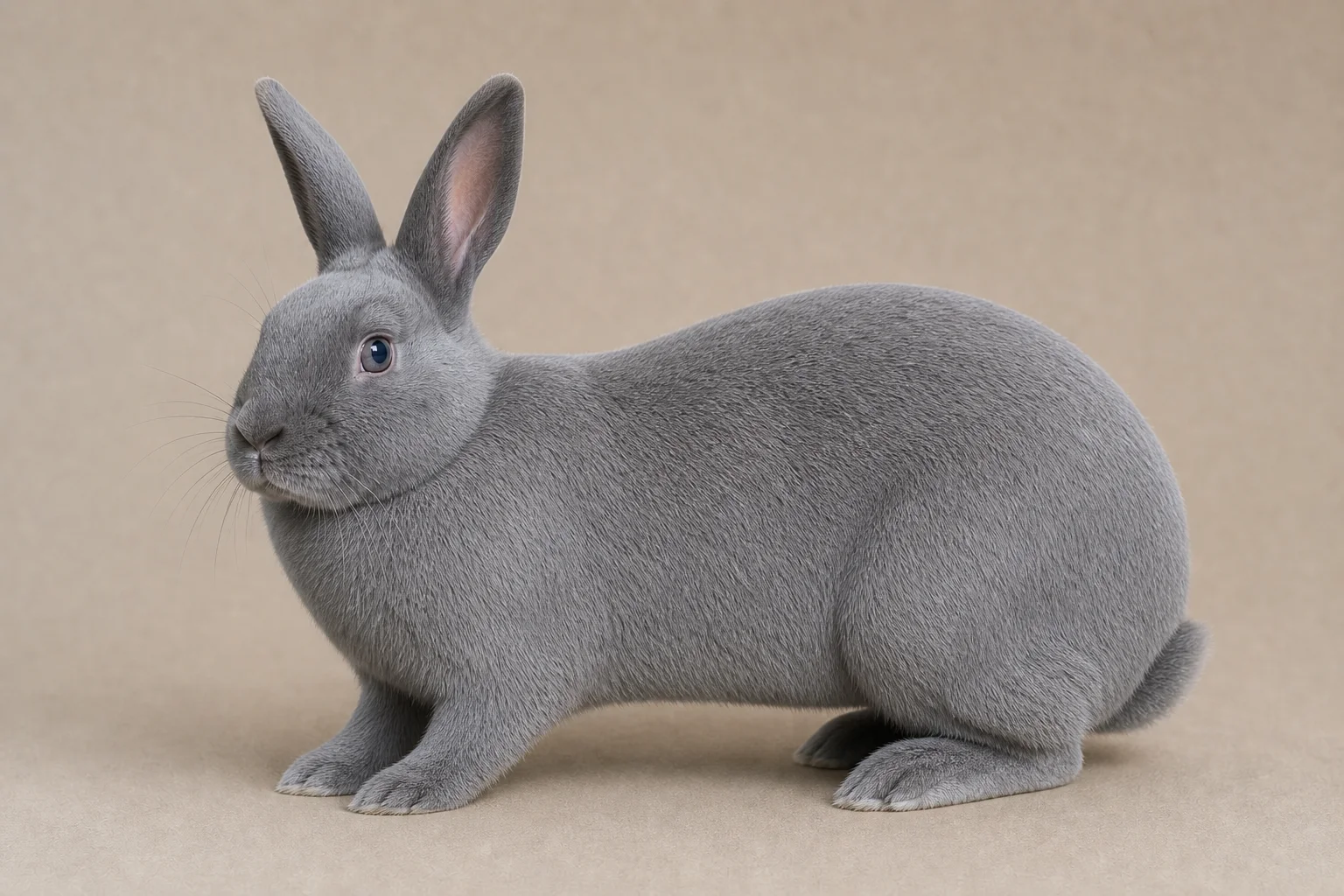
ARBA recognizes only Blue and White and sets a 12 lb (5.44 kg) maximum. The club standard describes a long, deep and wide semi-arch body with a smooth moderate rise, highest just ahead of the stifle, plus a normal flyback coat. Blue should be even and rich; White is a separate accepted variety. Color, size or this photograph cannot by itself verify an American pedigree.
A calm reputation still requires individual assessment
ARBA and the breed club describe a calm or docile reputation, but registries do not predict every rabbit. Evaluate pain, fear, prior handling and response to people and other rabbits. Use reward-based habituation and provide enough space to run, stand upright, stretch, hide, rest and interact with a compatible companion.
Support a large semi-arch body without forcing weight
Offer unlimited grass hay and fresh water, appropriate leafy greens and measured complete pellets. Check body condition by touch rather than trying to reach the maximum show weight. Provide dry, non-slip resting surfaces and room for normal movement; inspect the feet, hocks, nails, coat and underside. Adjust housing and feeding to the individual, life stage and veterinary advice.
Do not invent breed-specific disease guarantees
Reliable sources do not establish a unique American-rabbit disease list. Monitor the same important warning signs as in other domestic rabbits: reduced appetite or faeces, weight or condition change, dental pain, discharge, breathing difficulty, skin damage, urine scald and sore feet. Appetite loss, abdominal swelling, severe pain or lethargy needs prompt assessment by a rabbit-experienced veterinarian.
Select verified type and health, not production promises
Confirm pedigree and use the current governing standard; do not identify breeding stock by color alone. Record mature weight and condition, semi-arch structure, movement, coat and color, teeth, feet, recurring illness, behaviour, matings, kindlings, kit survival and doe recovery. Compare performance within the same management system. No sound source supports one guaranteed litter size, 14-week slaughter age or 58% meat yield for every American.
- Keep the 1917 debut distinct from the March 1918 published standard.
- Treat 5.44 kg as a maximum show value, not a feeding target.
- Do not publish fixed litter, slaughter-age or carcass-yield promises.
Frequently asked questions
How much does an American rabbit weigh?
ARBA sets a maximum of 12 lb (5.44 kg). That is a show limit, not an ideal weight for every rabbit.
Was the American rabbit recognized in 1917 or 1918?
The breed was first shown and presented in 1917; its first published standard appeared in March 1918.
Which American rabbit colors are recognized?
The current ARBA breed page recognizes two varieties: Blue and White.
Are all American rabbits calm?
No. Calmness is a breed reputation; health, socialisation, environment and individual history shape behaviour.
- Breed standardAmerican Rabbit Breeders Association — American
- Breed standardBlue and White American Rabbit Club — Breed History
- Breed standardBlue and White American Rabbit Club — A Study of the Standard of Perfection
- VeterinaryMSD Veterinary Manual — Noninfectious Diseases of Rabbits
- Animal welfareRSPCA — What should I feed my rabbits?
- Animal welfareRSPCA — How to keep rabbits healthy
- Animal welfareRSPCA — The ideal home for rabbits
- VeterinaryMSD Veterinary Manual — Management of Rabbits
- VeterinaryMSD Veterinary Manual — Nutrition of Rabbits
- VeterinaryMSD Veterinary Manual — Routine Health Care of Rabbits
This profile does not diagnose an individual rabbit or replace the current ARBA standard. Consult a rabbit-experienced veterinarian about health, feeding or breeding decisions.