French origin and the 1924 milestone
ARBA states that the Rex was shown publicly at the Paris International Rabbit Show in 1924 and imported to the United States in the same year by John Fehr and Alfred Zimmerman. This supports a French origin and a documented international milestone, not the unsupported claim that every modern national Rex standard began on one identical date.
Body, weight and true rex coat
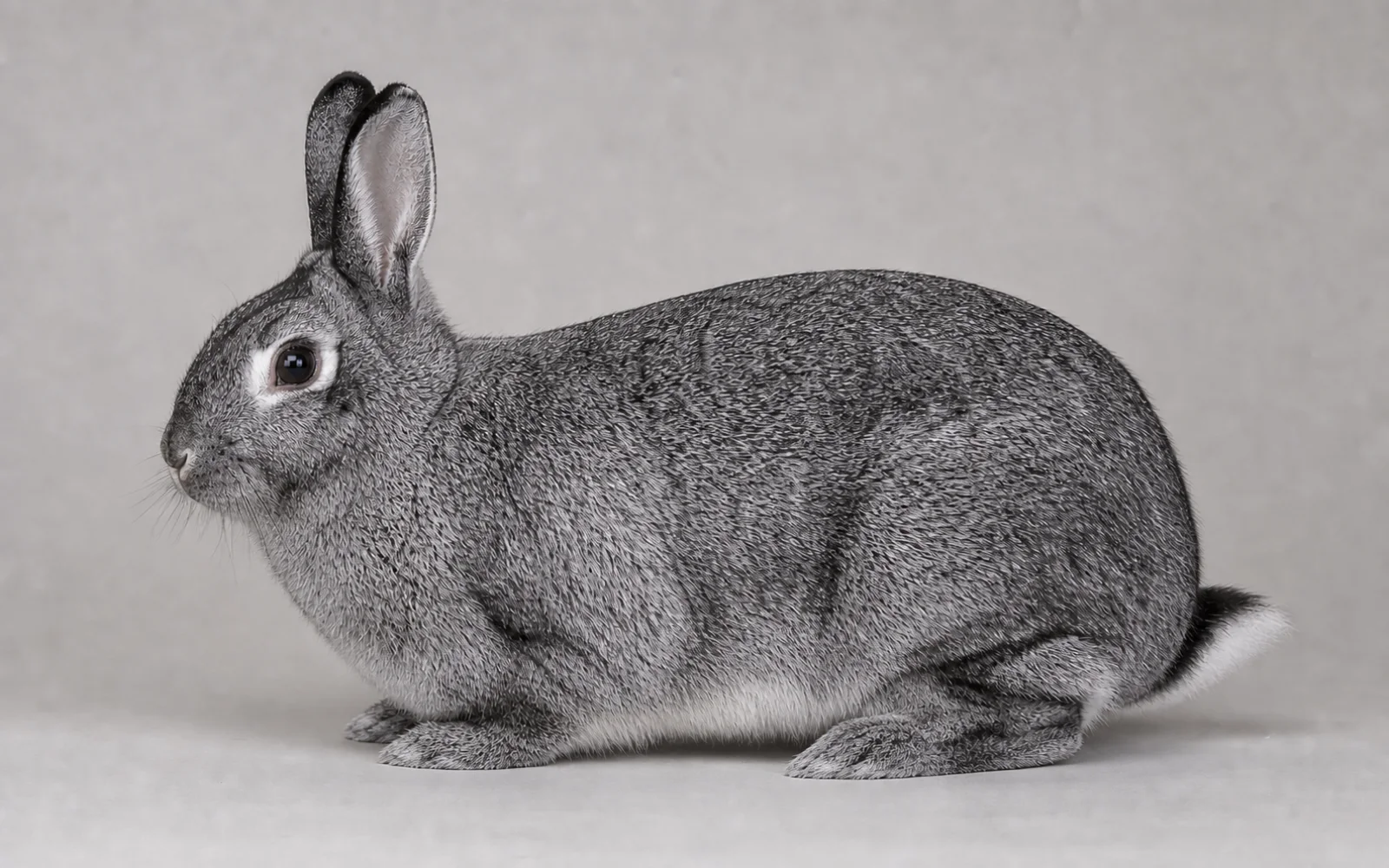
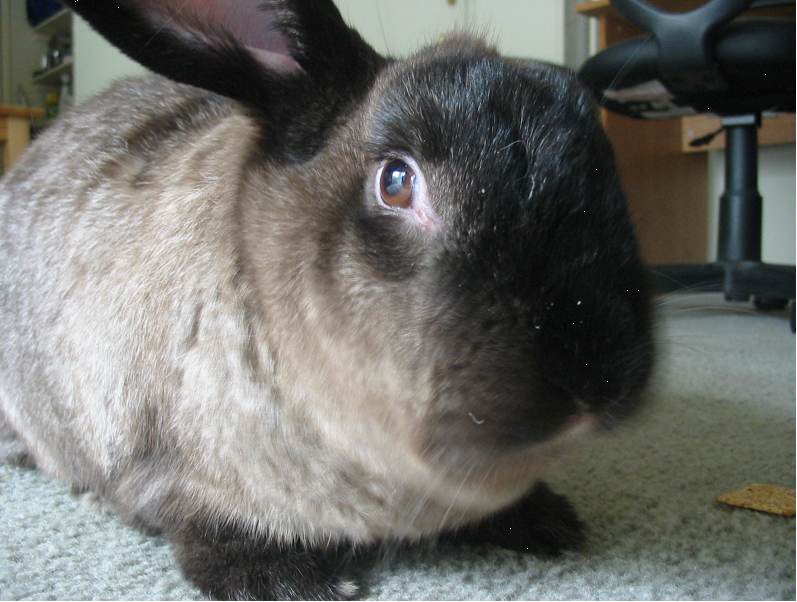
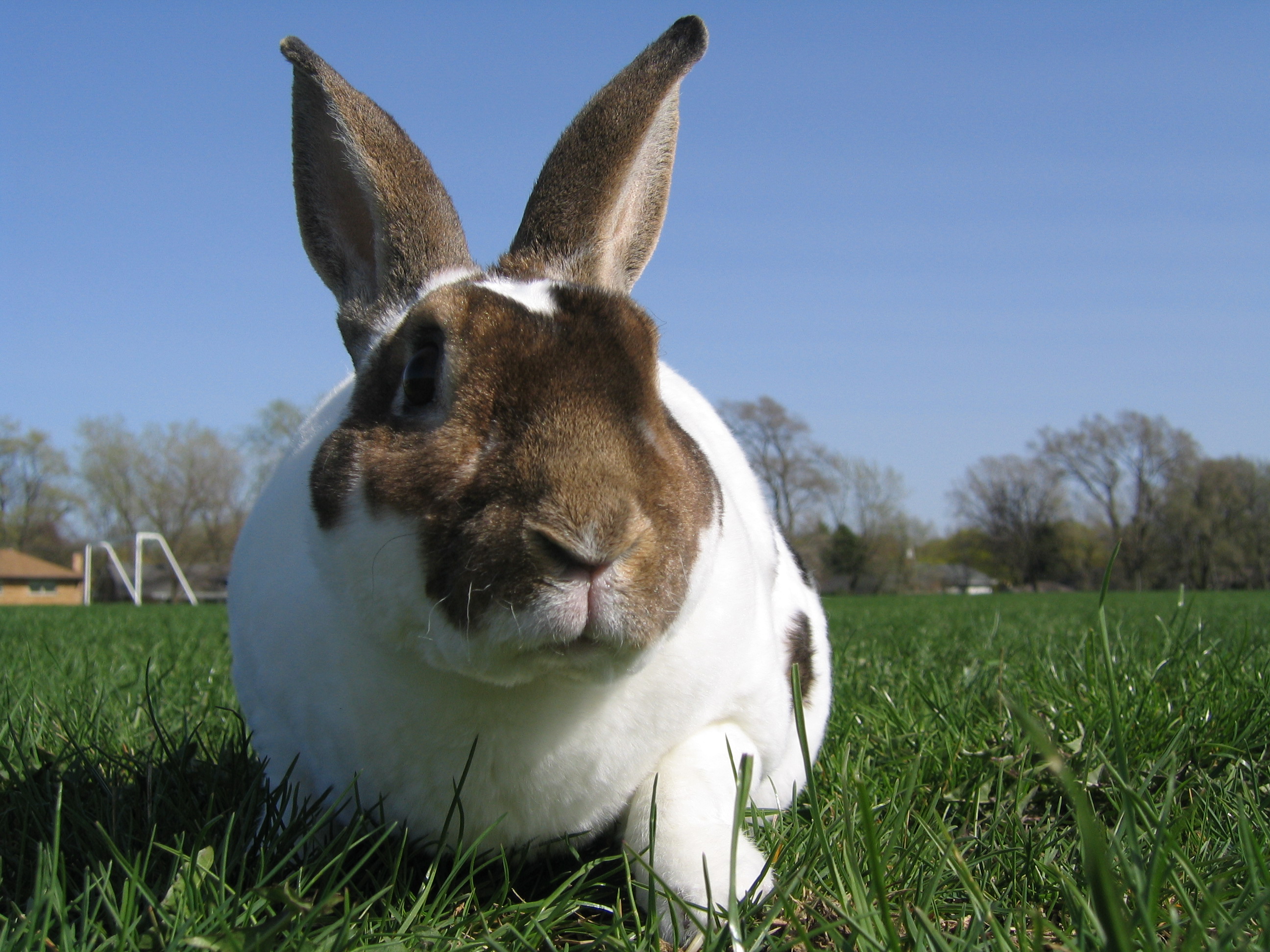
ARBA sets a maximum show weight of 10.5 lb (4.76 kg) and describes the short, dense, plush coat as the breed’s defining feature. Colour, density, texture and body type must be assessed under the current registry standard; a soft or curly coat alone cannot establish breed identity.
Temperament and suitable housing
Rex rabbits are often described as tractable, but behaviour remains individual and is shaped by handling, pain, hormones and environment. They need continuous room to run, rear, hide and forage, secure non-slip footing and social contact with a compatible rabbit; show size is not a housing prescription.
Diet, grooming and supportive flooring
Provide continuously available grass hay and fresh water, suitable leafy foods and measured complete pellets according to age and body condition. Groom gently during moulting and keep resting areas dry, clean and comfortably supportive: the special coat should never be used as a reason for abrasive wire-only resting surfaces.
Feet, teeth and warning signs
MSD notes ulcerative pododermatitis as a particular concern in Rex rabbits, while pressure, trauma, moisture, hygiene, weight and flooring all contribute. Check soles, nails, gait, incisors, appetite and droppings routinely. Hair loss, redness, sores, reduced eating or fewer faecal pellets require prompt rabbit-experienced veterinary assessment.
Evidence-led Rex selection
Select for functional feet and movement, healthy dentition and breathing, stable temperament, body condition and a coat that meets the chosen standard without sacrificing welfare. Record pedigrees, matings, kindlings, live and stillborn kits, growth, adult weight, foot lesions, dental findings and longevity instead of advertising breed-wide production guarantees.
- Keep Rex and Mini Rex records separate.
- Do not breed recurrent unexplained foot or dental disease before veterinary review.
- Compare litter and growth data within the same management system.
Frequently asked questions
How big does a Rex rabbit get?
ARBA lists a maximum show weight of 10.5 lb (4.76 kg). Individual healthy weight depends on frame and body condition.
Is a Rex the same as a Mini Rex?
No. They are separate ARBA breeds with different size standards, despite sharing rex-type coat texture.
Do all Rex rabbits develop sore hocks?
No. Rex rabbits deserve careful foot monitoring, but pododermatitis is multifactorial rather than inevitable.
When did the Rex breed appear?
ARBA records a public showing in Paris and importation to the United States in 1924.
- Breed standardAmerican Rabbit Breeders Association — Rex
- Peer reviewedVetCompass — Demography, disorders and mortality of pet rabbits under primary veterinary care in the UK (2024)
- VeterinaryMSD Veterinary Manual — Disorders and Diseases of Rabbits
- Animal welfareRSPCA — What should I feed my rabbits?
- Animal welfareRSPCA — How to keep rabbits healthy
- Animal welfareRSPCA — The ideal home for rabbits
- VeterinaryMSD Veterinary Manual — Management of Rabbits
- VeterinaryMSD Veterinary Manual — Nutrition of Rabbits
- VeterinaryMSD Veterinary Manual — Routine Health Care of Rabbits
This profile cannot diagnose an individual rabbit or replace a rabbit-experienced veterinarian. Check the current registry standard before showing or breeding.