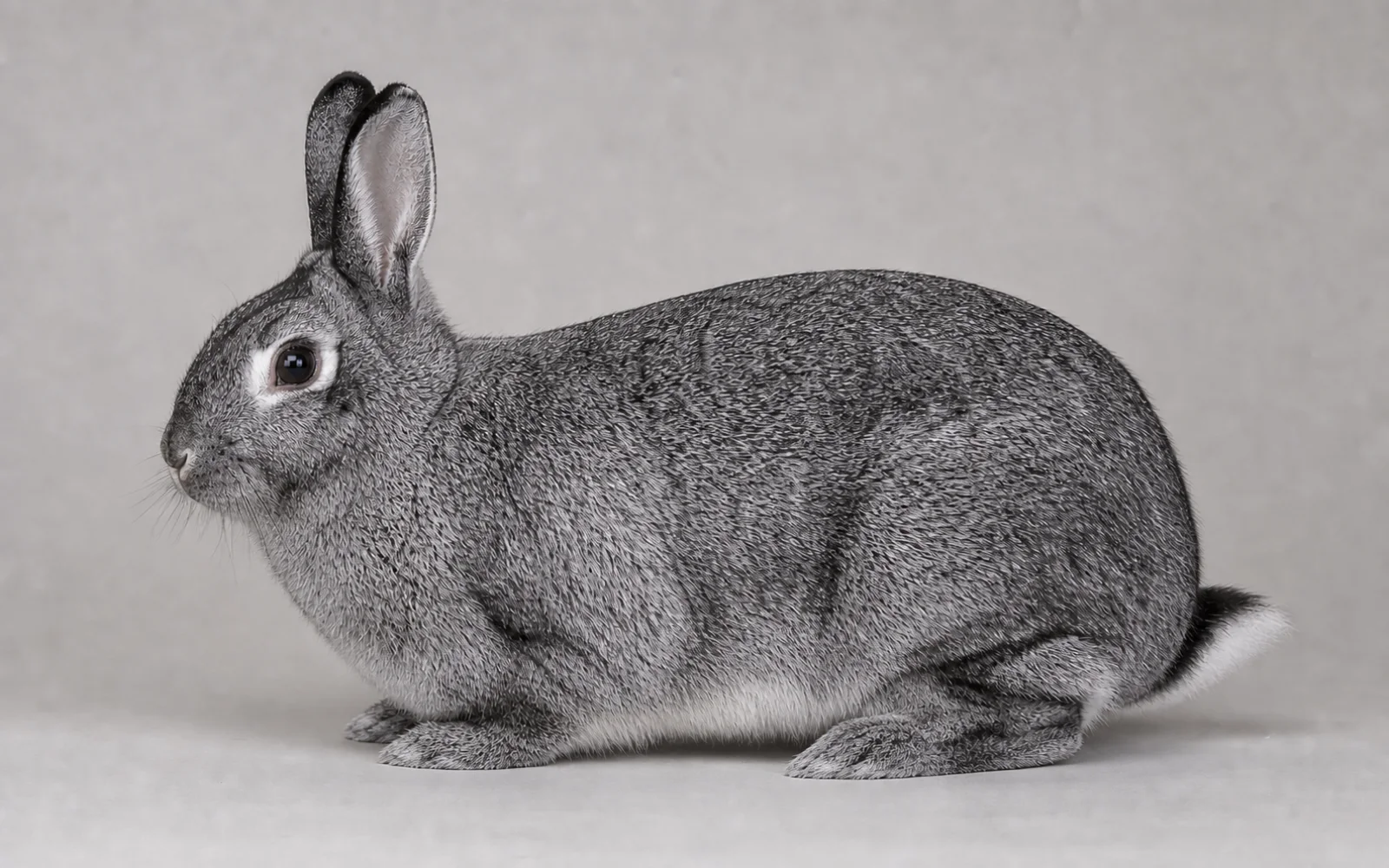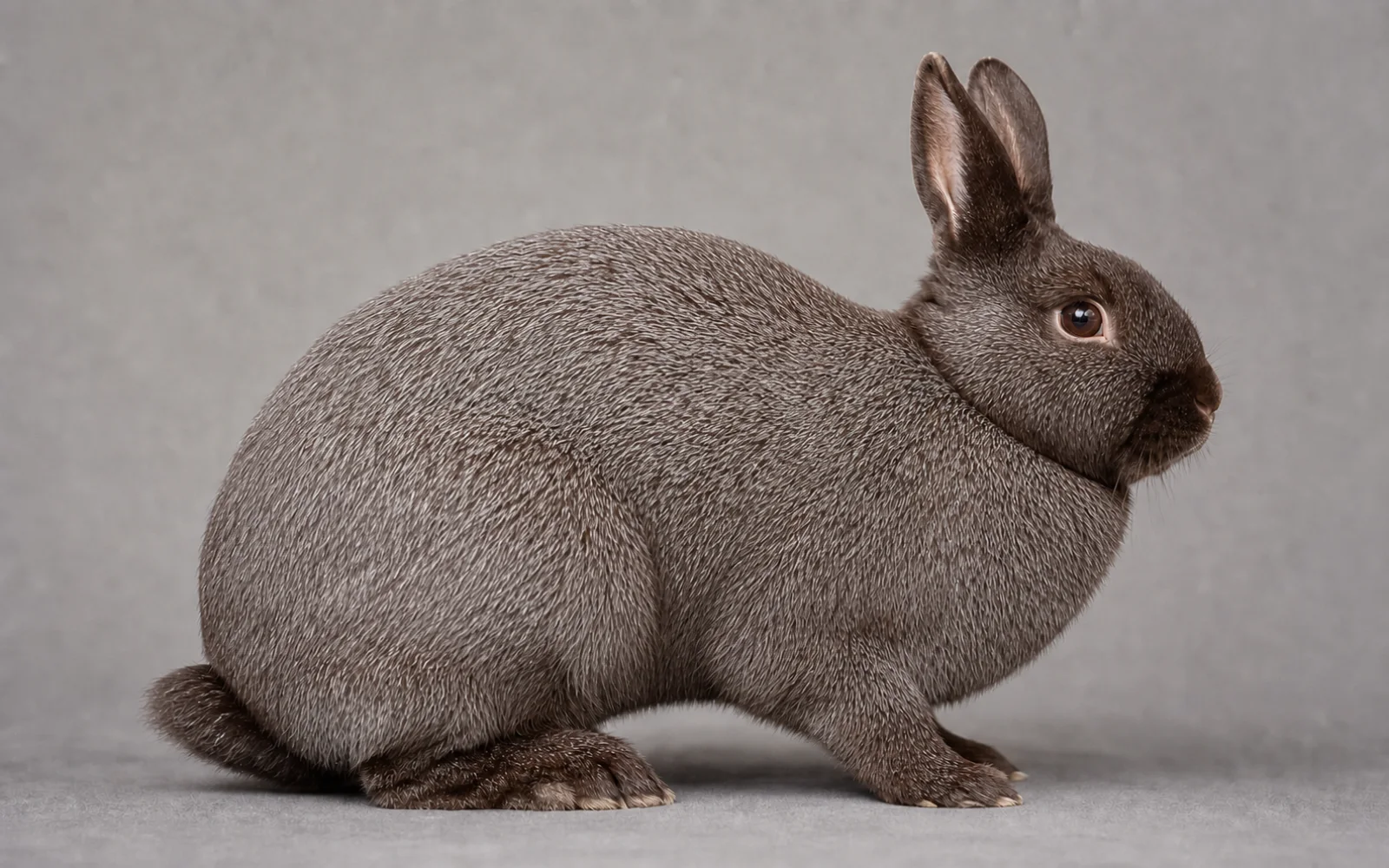

An American-developed variety despite the New Zealand name
ARBA explicitly states that the New Zealand breed was developed in the United States and recognized in 1916. A 1917 primary-source book devoted to the Red shows that this color was already commercially promoted at the time, but old marketing stories about imported New Zealand origin should not override the registry account. ARBA says Reds were initially more popular, after which White became dominant because white pelts were easier to dye. Under current ARBA classification, New Zealand Red is a color variety within New Zealand, not an independently recognized breed.
Commercial six-class type, red variety and a 12 lb maximum
ARBA’s public page gives the New Zealand breed a maximum of 12 lb (5.44 kg). The current Breed ID Guide lists Black, Blue, Broken, Red and White showroom groups, identifies the breed as six-class and registers solid Red separately from Broken Red. Exact class weights, faults and color points belong to the current Standard of Perfection; the old database’s uniform 3.6–4.5 kg range is not a complete ARBA standard. Red color is biological, not a production score: MC1R research associates red/fawn/yellow coats with homozygous recessive non-extension e, and OSU explains that ee limits extension of dark pigment in the hair.
Commercial breed history does not guarantee a calm temperament
No breed standard or controlled behavioral evidence proves that every New Zealand Red is calm, docile or suitable for inexperienced handlers. A large rabbit still has individual responses shaped by pain, fear, hormones, early experience, housing and handling. Provide hiding areas, foraging, predictable routines and a compatible rabbit companion. Work at floor level and reward voluntary contact. Never lift by ears or skin; when lifting is necessary, support the chest and the whole hindquarters. Sudden aggression, withdrawal or posture change should trigger a health review.
A large commercial body needs space, traction and weight control
Provide permanently connected living and exercise space for several full hops, upright standing, stretching, turning, exploration and retreat. ARBA’s older care table placed New Zealand in the 8.8–11.9 lb enclosure band, but a minimum table is not a full welfare plan. Use dry, stable, non-slip flooring and comfortable resting areas. Feed unlimited grass hay and constant fresh water, suitable leafy greens and a measured complete pellet adjusted for age, body condition and reproduction. Monitor weight rather than maximizing mass; inspect appetite, feces, teeth, nails, soles, skin, coat and movement.
Red color does not create verified cold tolerance or immunity
No cited veterinary or breed-standard source validates the old claim that Red New Zealands tolerate cold better than White animals. Coat color alone is not a diagnosis or climate plan. Prevent heat stress, drafts, wet bedding, obesity and prolonged pressure on the feet. Reduced eating or feces, drooling, weight loss, diarrhea, abdominal swelling, breathing difficulty, head tilt, urine scald, sore feet, skin lesions or marked lethargy require prompt rabbit-experienced veterinary care. Track individual health and local disease prevention rather than assuming breed-wide resilience.
Select documented performance, health and correct red identity
Use the current ARBA standard and complete pedigrees. Record solid Red or Broken Red identity, ancestry, mature weight, body structure, feet, bite, condition, matings, every birth and loss, growth, feed conditions and doe recovery. The recessive e/e phenotype explains non-extension color but does not reveal all hidden color loci, prove purity or guarantee red intensity; consistent records and test matings remain important. Compare growth and reproductive outcomes only at matched age, diet, housing and health status. No authoritative breed standard guarantees eight kits, 58% meat yield, faster or slower growth, a 12-week slaughter point or a premium pelt.
- Record whether the ARBA variety is solid Red or Broken Red.
- Track weights, feed context, feet, bite, births, losses and doe recovery.
- Do not turn color genetics into unsupported guarantees of purity or output.
Frequently asked questions
Did New Zealand Red rabbits come from New Zealand?
ARBA says the New Zealand breed was developed in the United States despite its name.
How much does a New Zealand Red rabbit weigh?
ARBA’s public breed page gives New Zealand a maximum of 12 lb, about 5.44 kg. Use the current standard for class-specific limits.
Is New Zealand Red a separate ARBA breed?
No. Red is one of the current New Zealand showroom and registration varieties.
What makes a New Zealand Red rabbit red?
Peer-reviewed MC1R work associates red/fawn/yellow rabbit coats with homozygous recessive non-extension e; other loci and modifiers still affect the final color.
- Breed standardAmerican Rabbit Breeders Association — New Zealand
- Breed standardARBA — Breed ID Guide, updated January 2026
- Breed standardC. P. Gilmore — The New Zealand Red Rabbit and Rabbit Culture (1917 historical primary source)
- Peer reviewedAnimal Genetics — MC1R mutations associated with domestic-rabbit coat colors (2006)
- Peer reviewedOregon State University Extension — Rabbit coat color genetics
- Animal welfareARBA — Recommendations for the Care of Rabbits and Cavies
- Breed standardWikimedia Commons — Documented Red New Zealand rabbit photograph
- VeterinaryMSD Veterinary Manual — Noninfectious Diseases of Rabbits
- Animal welfareRSPCA — What should I feed my rabbits?
- Animal welfareRSPCA — How to keep rabbits healthy
- Animal welfareRSPCA — The ideal home for rabbits
- VeterinaryMSD Veterinary Manual — Management of Rabbits
- VeterinaryMSD Veterinary Manual — Nutrition of Rabbits
- VeterinaryMSD Veterinary Manual — Routine Health Care of Rabbits
This profile does not replace the current ARBA Standard of Perfection, authenticate pedigree, guarantee production or diagnose disease. Use complete records and a rabbit-experienced veterinarian.