The original lop and later breed development
ARBA traces the English Lop to the early 1800s, notes its popularity in Victorian Britain and identifies it as a foundation for French Lop and Mini Lop development. These are documented breed-history statements; exact undocumented origin dates should not be invented.
Exceptional ears and weight context
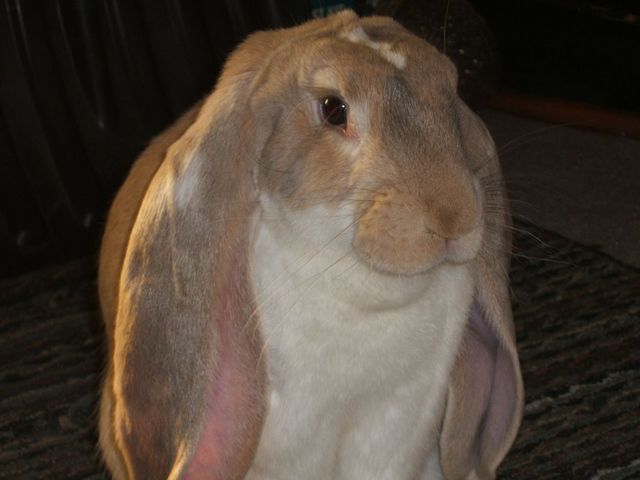
The breed is defined by extremely long lopped ears and a distinctive body type. ARBA’s public page gives seniors no maximum weight. Ear span, width, balance, condition and class requirements belong to the current standard, while a photograph or long ears alone cannot verify pedigree.
Behaviour and ear-safe housing
ARBA describes an easy-going breed, but pain, handling and environment shape behaviour. Provide generous unobstructed floor space, non-slip routes, large hides and bowls positioned so ears are not repeatedly trapped, soaked or dragged through contamination.
Diet, temperature and daily inspection
Offer unlimited suitable grass hay and water, appropriate greens and measured complete pellets. Check both surfaces and edges of each ear, nails, soles, eyes, teeth, appetite and droppings every day; use dry, clean bedding and protect the rabbit from temperature extremes.
Trauma, ear disease and hearing
Lop conformation is associated with increased ear-health risk at population level, while unusually long pinnae also create practical trauma and contamination hazards. Head shaking, scratching, wounds, swelling, odour, discharge, pain or reduced response to sound require prompt veterinary assessment; deeper disease may need imaging.
Do not select ear length without welfare
Breed only animals with intact ears, clinically healthy canals, functional movement, normal teeth and breathing, stable behaviour and good body condition. Record ear measurements alongside injuries, infections, hearing concerns, dental findings and lifespan so selection does not reward length while hiding its welfare cost.
- Use the current full standard for measurements.
- Exclude unresolved recurrent ear trauma or disease from breeding decisions.
- Design pens before kits grow their adult ears.
Frequently asked questions
Why are English Lop ears so long?
Long lopped ears are the breed’s defining selected trait; ARBA describes them as the longest of any rabbit breed.
Is there an ARBA maximum adult weight?
The current public ARBA page states no maximum weight for seniors.
Do all English Lops have ear disease?
No. Conformation raises risk at group level but does not diagnose an individual.
Did English Lops help create other breeds?
Yes. ARBA names the French Lop and Mini Lop among breeds developed using English Lop.
- Breed standardAmerican Rabbit Breeders Association — English Lop
- Peer reviewedEar health and quality of life in pet rabbits of differing ear conformations (2023)
- Peer reviewedComputed tomographic appearance of the middle and inner ear in domestic rabbits (2015)
- Peer reviewedVetCompass — disorders of pet rabbits under UK primary veterinary care (2024)
- Animal welfareRSPCA — What should I feed my rabbits?
- Animal welfareRSPCA — How to keep rabbits healthy
- Animal welfareRSPCA — The ideal home for rabbits
- VeterinaryMSD Veterinary Manual — Management of Rabbits
- VeterinaryMSD Veterinary Manual — Nutrition of Rabbits
- VeterinaryMSD Veterinary Manual — Routine Health Care of Rabbits
This educational profile does not replace a rabbit-experienced veterinarian or the current full registry standard.