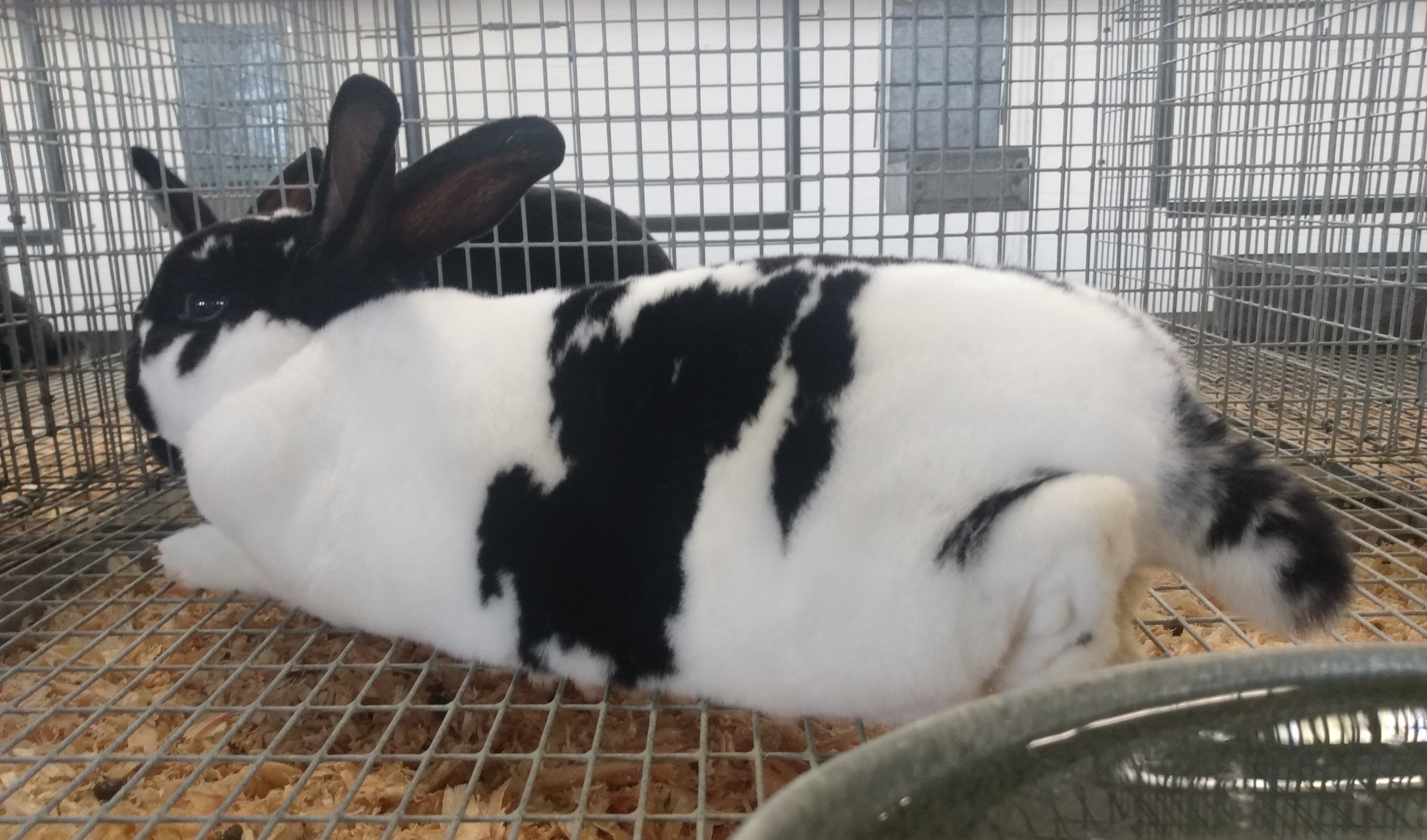

A European giant with a distinct British standard context
Continental Giant populations descend from the wider European giant-rabbit tradition associated with the Flemish Giant, but their names, colors and show rules vary between countries. Fur & Feather dates introduction to the British fancy to 2005, and the BRC currently lists Continental Giant as a recognized Fur breed. That is stronger evidence than assigning the modern British breed a single German origin or an exact 1893 creation date. The famous Darius claim also needs correction: Guinness records a 129 cm rabbit measured on 6 April 2010 and labels him Flemish Giant. The old card’s 4.4 m is more than three times the record length, and neither that page nor Guinness’s breed record verifies that Darius was a Continental Giant or weighed 22 kg.
Length, power and balance matter more than a viral weight
Fur & Feather describes Black, White, Dark Steel, Light Steel, Agouti, Opal and Yellow as British colors and gives 7.0 kg and over as the ideal weight. A historical BRC reprint, clearly marked correct only at December 2005, describes a powerful, long body with a strong back rising to broad rounded hindquarters, a large head, substantial erect ears and dense rollback coat; it gave a 65 cm minimum for colored animals and 64 cm for whites. Use those measurements as historical context and consult the current paid 2025–2030 BRC book for judging. There is no verified upper show weight in the reviewed public current sources, so the old 10.5 kg maximum and social-media size claims are not presented as facts.
Giant size does not guarantee a gentle personality
Neither the public BRC list nor the reviewed standard material proves that every Continental Giant is calm, docile or suitable for a child. Behaviour depends on the individual, pain, fear, socialization, reproductive state and handling. Work at floor level, reward voluntary contact and avoid chasing. If lifting is unavoidable, support the chest and the powerful hindquarters completely; a struggling giant can injure both itself and the handler. Provide hiding places large enough for the whole rabbit, predictable routines, enrichment and compatible rabbit companionship. Assess each animal’s handling history and body language instead of buying by the “gentle giant” stereotype.
Design housing around full stride and adult dimensions
The BRC explicitly says giants require ample space and robust housing. A Continental Giant must be able to run, make successive hops, rear upright, turn, stretch fully and rest without touching enclosure walls; doors, carriers, shelves, litter trays and hides must also fit the adult. Use dry, stable, non-slip surfaces and comfortable resting areas rather than abrasive wire. Feed unlimited grass hay, constant fresh water, appropriate leafy greens and measured complete pellets adjusted to age, growth, reproduction and body condition. Do not force-feed toward record weight: Guinness says it does not ratify rabbit weight records because doing so could encourage overfeeding. Provide shade, ventilation and weather protection.
Monitor giant-rabbit mechanics without inventing a syndrome
The reviewed sources do not establish a disease unique to Continental Giants. Their size makes practical monitoring of body condition, mobility, nails, underside and weight-bearing feet especially important, while pododermatitis risk also depends on flooring, moisture, obesity and individual anatomy. Check appetite, faecal output, weight trend, teeth, breathing, eyes, nose, skin, urine staining, feet and gait. Scales, carriers and examination tables must safely support the rabbit. Reduced eating or droppings, abdominal distension, breathing difficulty, sudden weakness, severe pain, heat distress or inability to move normally requires prompt attention from a rabbit-experienced veterinarian.
Select sound giant structure, not extreme headline weight
Breed only identified, pedigreed stock against the current national standard. Record mature length and balanced type, color, coat, body condition, feet, gait, teeth, recurring illness, handling response, matings, kindlings, kit survival, growth and doe recovery. A historical BRC measurement may help interpret older pedigrees but must not override the 2025–2030 book. Continental Giant and Flemish Giant labels should not be swapped merely because both animals are large, and viral photos cannot authenticate a pedigree. No reviewed authority supports a guaranteed litter of eight, 50% carcass yield, 18-week endpoint or a fixed mating ratio. Plan pairings and weaning from animal condition, veterinary advice, welfare law and measured line records.
- Confirm the national standard and pedigree before using the Continental Giant name.
- Select balanced length, sound feet, mobility, health and maternal records together.
- Never pursue record weight through overfeeding or unverified production formulas.
Frequently asked questions
How much does a Continental Giant rabbit weigh?
Fur & Feather gives 7.0 kg and over as the British ideal. The reviewed public current sources do not publish the database’s 10.5 kg upper limit, so it is not treated as an official maximum.
Is the Continental Giant recognized by ARBA?
It is recognized by the British Rabbit Council, not as a separate ARBA breed. In North America, do not relabel a Flemish Giant simply because it is very large.
Is a Continental Giant the same as a Flemish Giant?
They share European giant-rabbit background, but the modern Continental Giant has its own British standard context. National breed names, colors and judging rules should not be treated as interchangeable.
Was Darius a 4.4-metre, 22-kg Continental Giant?
No. Guinness records Darius at 129 cm (4 ft 3 in) and calls him a Flemish Giant. Its record page does not verify 22 kg; the old card’s 4.4 m was false.
- Breed standardBritish Rabbit Council — Recognised rabbit breeds
- Breed standardBritish Rabbit Council — Standards 2025–2030
- Breed standardFur & Feather — Continental Giant breed profile
- Breed standardHistorical BRC Continental Giant standard reprint — correct at December 2005
- Breed standardGuinness World Records — Longest rabbit
- Breed standardGuinness World Records — Largest breed of domestic rabbit
- VeterinaryMSD Veterinary Manual — Noninfectious Diseases of Rabbits
- Animal welfareRSPCA — What should I feed my rabbits?
- Animal welfareRSPCA — How to keep rabbits healthy
- Animal welfareRSPCA — The ideal home for rabbits
- VeterinaryMSD Veterinary Manual — Management of Rabbits
- VeterinaryMSD Veterinary Manual — Nutrition of Rabbits
- VeterinaryMSD Veterinary Manual — Routine Health Care of Rabbits
This profile does not diagnose an animal or replace the current BRC or national standard. Verify show rules locally and health decisions with a rabbit-experienced veterinarian.