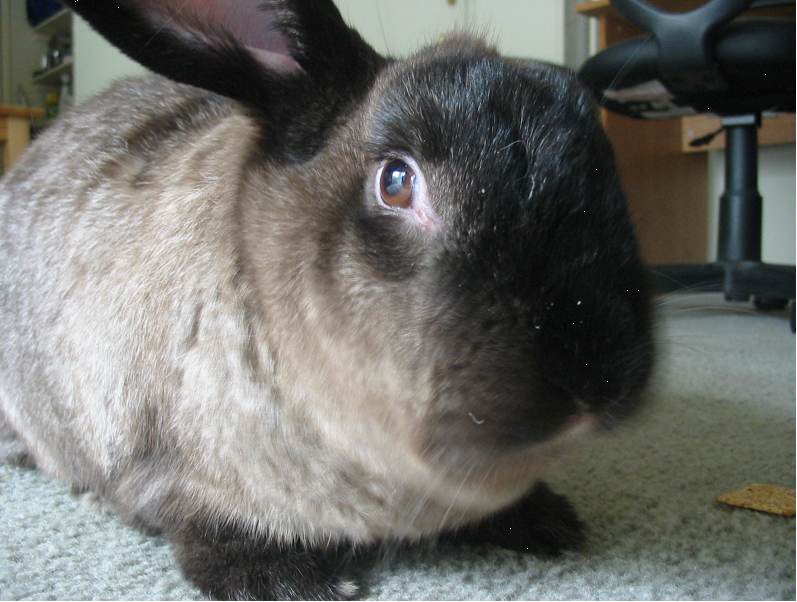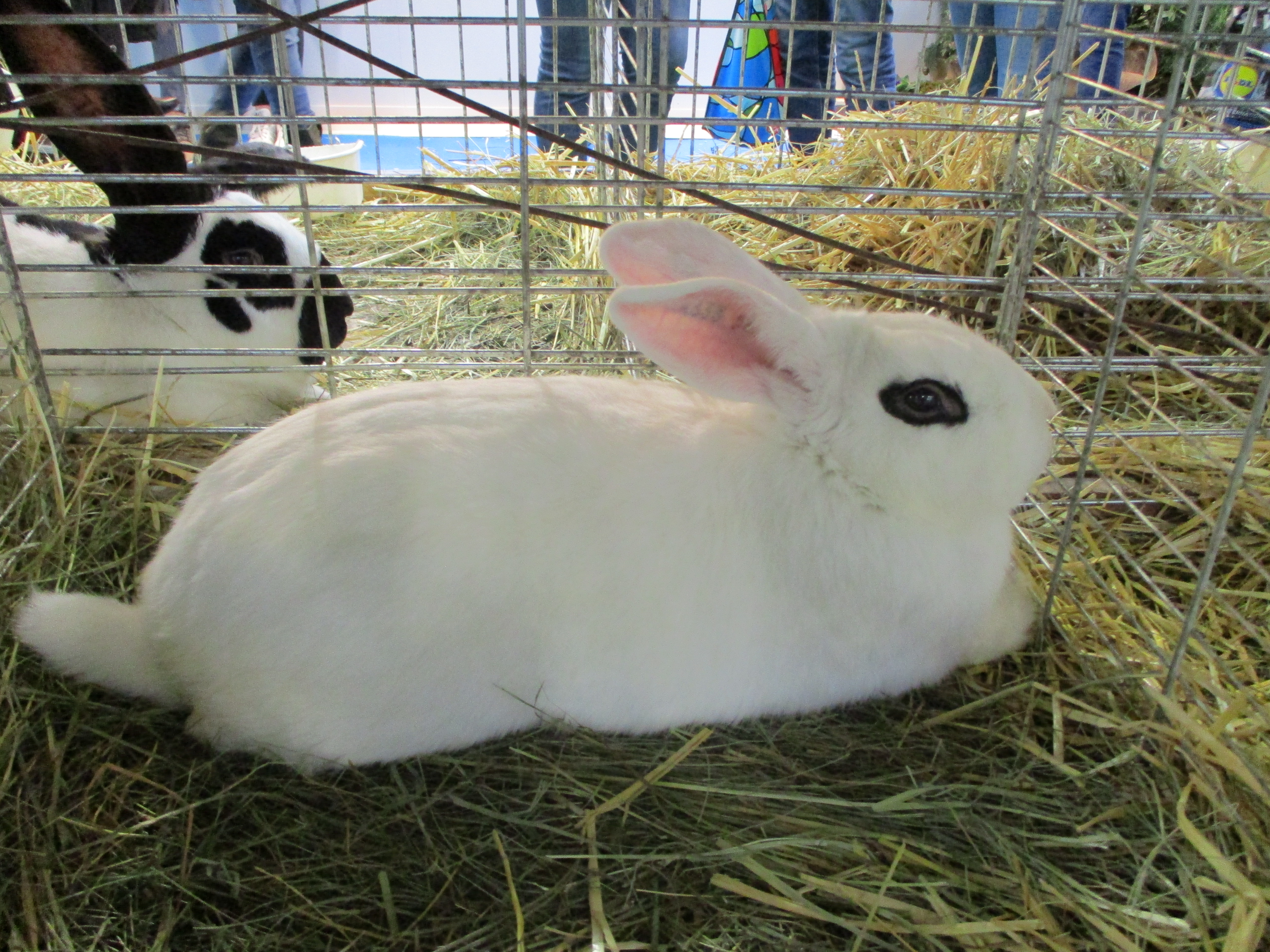

English Polish became Britannia Petite in North America
ARBA and its chartered breed club agree that the breed originated in England and is called Polish there. When the British type entered the US, the name Britannia Petite avoided confusion with the already recognized American Polish rabbit. Warren and Wendy Pocha achieved ARBA acceptance for Ruby-Eyed White in 1977. The club records later US variety milestones from Black Otter in 1992 through Himalayan and Tortoise groups in 2022. The reviewed official history does not substantiate the database statement that small wild rabbits were its founders, so that ancestry should not be repeated as fact.
A tiny full arch, not a compact dwarf silhouette
The breed-club judging guide calls for a smooth continuous arch from the neck to the tail base, daylight beneath the body, fine straight legs, a slight taper from shoulders to hips, a wedge-shaped head, bold eyes and close upright ears. It specifically rejects a broad, heavy commercial build and a round dwarf-like head. The mature ideal is 2.25 lb (1.02 kg), with an ARBA maximum of 2.5 lb (1.13 kg). ARBA’s January 2026 guide lists Black, Blue-Eyed White, Broken, Chestnut Agouti, Himalayan, Otter, Ruby-Eyed White, Sable Marten, Siamese Sable and Tortoise Shell groups; exact accepted sub-colors still depend on the current standard.
Energetic and sensitive does not mean inherently aggressive
ARBA and ABPRS describe an active, energetic, high-strung breed that needs patience to handle and pose. The club also challenges the reputation that every Petite is mean, linking difficult behavior partly to animals that were seldom handled. Treat these as population tendencies, not guarantees. Build trust with brief reward-based sessions, approach on the floor, support the chest and hindquarters, and never lift by the ears. Pain, fear, reproductive state, previous experience and the individual rabbit all affect behavior.
Small body, full-sized welfare needs
A 1 kg rabbit still needs continuous room to run, hop, rear, hide, forage and rest with a compatible rabbit. Secure the exercise area because this full-arch breed is quick and can jump; use non-slip surfaces and block dangerous drops. Feed unlimited grass hay, fresh water, suitable leafy greens and a measured complete pellet rather than copying old club suggestions for cereal, toast or routine sugary treats. Monitor body condition by touch because a fine frame is correct, but prominent bone, muscle loss or excess fat is not.
No verified breed-exclusive disease list
The reviewed breed sources do not establish a unique Britannia Petite disease syndrome. Its small size and fine bone make calm, fully supported handling and fall prevention especially sensible, but do not justify diagnosing fragility from breed alone. Check appetite, faeces, weight trend, incisors and cheek teeth, eyes, nose, breathing, skin, feet, urine staining and movement. Reduced eating or droppings, abdominal swelling, breathing difficulty, severe pain, neurological signs or marked lethargy require prompt rabbit-experienced veterinary care.
Select for balance and health, not size alone
Verify pedigree because the British name Polish can be confused with the distinct American Polish breed. Record mature weight, continuous full arch, fine but sound bone, wedge head, eye and ear balance, correct variety, teeth, feet, recurring illness, handling response, matings, kindlings, kit survival and doe recovery. Do not chase ever-smaller adults at the expense of function, and use the current ARBA standard for color pairings and show eligibility. No reliable standard source supports a fixed three-kit litter, zero weaning age, universal temperament or a “show only” biological category.
- Keep Britannia Petite and American Polish pedigrees distinct.
- Use 1.02 kg as the club ideal and 1.13 kg as the ARBA maximum.
- Balance full-arch type, sound movement, health and behavior records.
Frequently asked questions
How much does a Britannia Petite rabbit weigh?
The US breed club gives an ideal mature weight of 2.25 lb (1.02 kg); ARBA publishes a maximum of 2.5 lb (1.13 kg).
Is Britannia Petite the same as a Polish rabbit?
In Britain the breed is called Polish. In the United States, Britannia Petite and the American Polish are separate breeds, so region and pedigree matter.
Are Britannia Petites aggressive?
Not inherently. Official sources describe them as energetic and sometimes high-strung; patient habituation, safe handling and the individual’s history matter more than a label.
Did Britannia Petite descend from wild rabbits?
The official ARBA and ABPRS sources reviewed here do not document that database claim. They support English origin, but not a verified small-wild-rabbit founder formula.
- Breed standardAmerican Rabbit Breeders Association — Britannia Petite
- Breed standardAmerican Britannia Petite Rabbit Society — History of the Britannia Petite
- Breed standardAmerican Britannia Petite Rabbit Society — Judging the Britannia Petite
- Breed standardARBA — Rabbit Breed ID Guide (January 2026)
- VeterinaryMSD Veterinary Manual — Noninfectious Diseases of Rabbits
- Animal welfareRSPCA — What should I feed my rabbits?
- Animal welfareRSPCA — How to keep rabbits healthy
- Animal welfareRSPCA — The ideal home for rabbits
- VeterinaryMSD Veterinary Manual — Management of Rabbits
- VeterinaryMSD Veterinary Manual — Nutrition of Rabbits
- VeterinaryMSD Veterinary Manual — Routine Health Care of Rabbits
This profile does not diagnose an animal or replace the current ARBA or national standard. Confirm show rules locally and health decisions with a rabbit-experienced veterinarian.