Canadian development and ARBA recognition
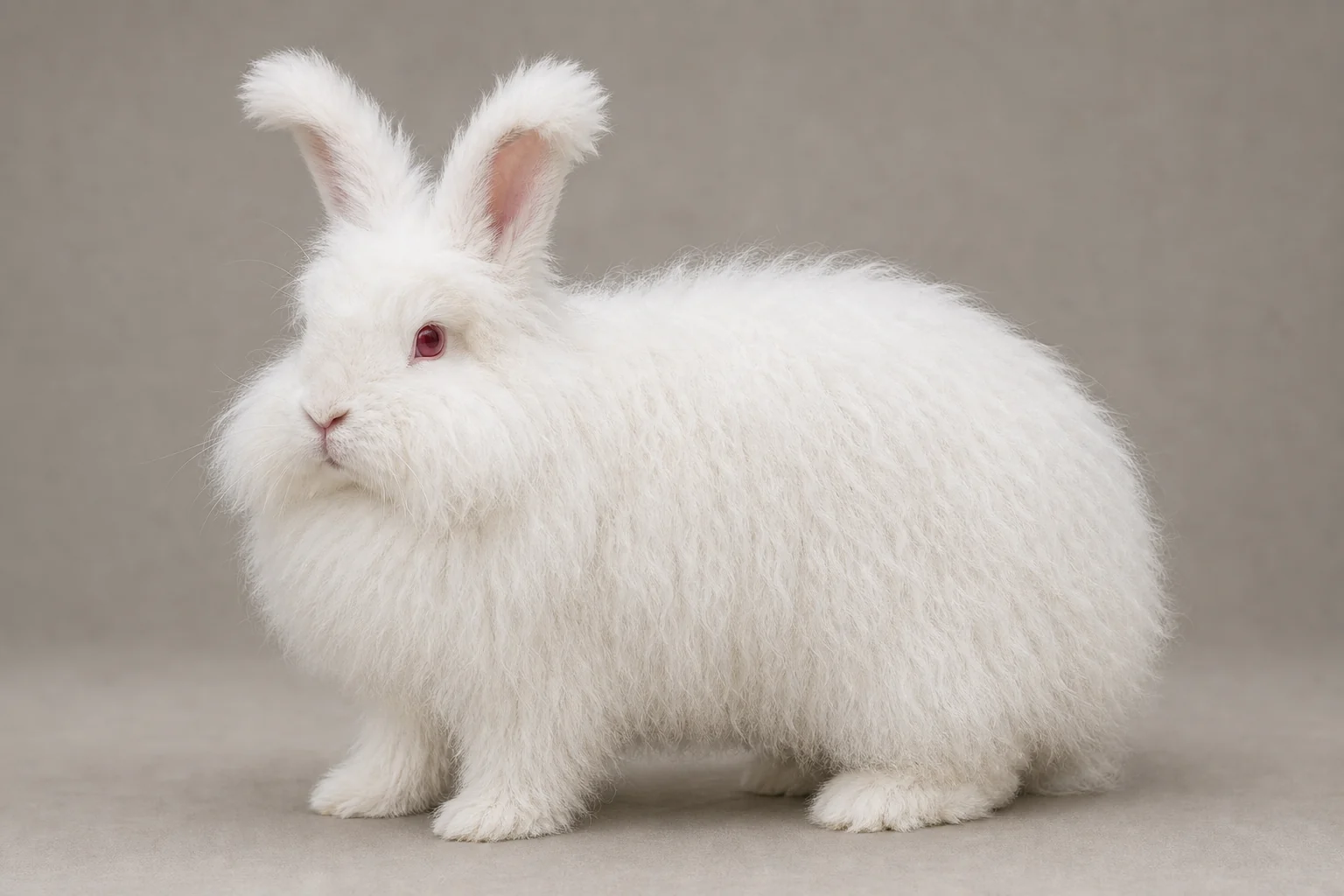
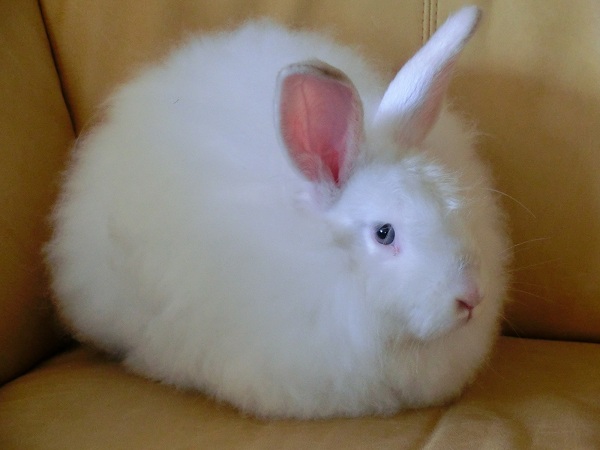
The Japan Angora Rabbit Research Society records Satin Angora as developed in Canada from a long-haired Satin mutation crossed with French Angora. ARBA documents recognition in 1987. This registry history is stronger than treating every glossy long-haired cross as a pedigreed Satin Angora.
Commercial body, fine fibre and visible sheen
NARBC describes fine, soft, silky wool whose smaller fibre diameter and clarity reflect light as sheen, and places seniors at 2.95–4.31 kg with 3.63 kg ideal. ARBA caps the breed at 4.31 kg. FGF5 evidence explains the Angora long-hair trait, but sheen, colour or a photograph alone cannot confirm pedigree.
Temperament is individual and handling is trained
ARBA emphasizes wool and commercial type, not a guaranteed personality. Each rabbit must be assessed and gradually trained for coat inspection and harvesting, with secure space to run, rear, rest, hide and interact with a compatible rabbit rather than being confined to preserve the fleece.
Protect sheen without sacrificing skin welfare
Inspect down to the skin at the armpits, groin, tail, feet and behind the ears; separate tangles before they tighten and use a humane harvesting method appropriate to the individual coat. Unlimited grass hay and fresh water support gut function, with suitable greens and measured complete pellets. Record grooming time, mats and harvest interval instead of copying a fixed schedule.
Mats, hidden lesions and gastrointestinal stasis
Fine long wool can conceal wounds, parasites, urine contamination, sore feet and weight loss. MSD explains that swallowed hair normally passes, while pain, insufficient fibre and reduced eating commonly contribute to gastrointestinal stasis. Reduced appetite or faeces, bloating, pain or lethargy requires prompt rabbit-experienced veterinary assessment.
Select sheen together with health and usable coat
Select the desired sheen and fibre quality only alongside healthy skin, eyes, teeth, feet and digestion, sound body condition, stable handling and a coat that can be managed humanely. Record fibre grade and weight, matting, care time, skin injury, appetite events, pedigrees, matings, kindlings, kit survival and doe recovery; do not promise a fixed yield or premium price.
- Keep ARBA maximum, NARBC range and ideal weight clearly labelled.
- Select usable sheen and texture without chronic matting.
- Do not breed unexplained skin, dental, foot or gut problems.
Frequently asked questions
How much does a Satin Angora weigh?
NARBC gives seniors 2.95–4.31 kg with 3.63 kg ideal; ARBA sets 4.31 kg as the maximum.
Why does Satin Angora wool shine?
NARBC attributes the sheen to fine fibre and the way the clearer hair shaft reflects light.
Was Satin Angora recognized in 1987?
Yes. ARBA documents breed recognition in 1987.
Does Satin Angora guarantee premium wool yield?
No. Sheen is a breed hallmark, but yield and commercial value depend on the animal, fibre grade, care and market.
- Breed standardAmerican Rabbit Breeders Association — Satin Angora
- Breed standardNational Angora Rabbit Breeders Club — Satin Angora breed classes
- Breed standardJapan Angora Rabbit Research Society — Angora breed histories and standards
- Peer reviewedBMC Genomics — FGF5 mutation and the long-hair trait in Angora rabbits (2023)
- VeterinaryMSD Veterinary Manual — Noninfectious Diseases of Rabbits
- Animal welfareRSPCA — What should I feed my rabbits?
- Animal welfareRSPCA — How to keep rabbits healthy
- Animal welfareRSPCA — The ideal home for rabbits
- VeterinaryMSD Veterinary Manual — Management of Rabbits
- VeterinaryMSD Veterinary Manual — Nutrition of Rabbits
- VeterinaryMSD Veterinary Manual — Routine Health Care of Rabbits
This profile cannot diagnose an individual rabbit. Verify the current ARBA standard and consult a rabbit-experienced veterinarian for coat, skin, dental or gut concerns.