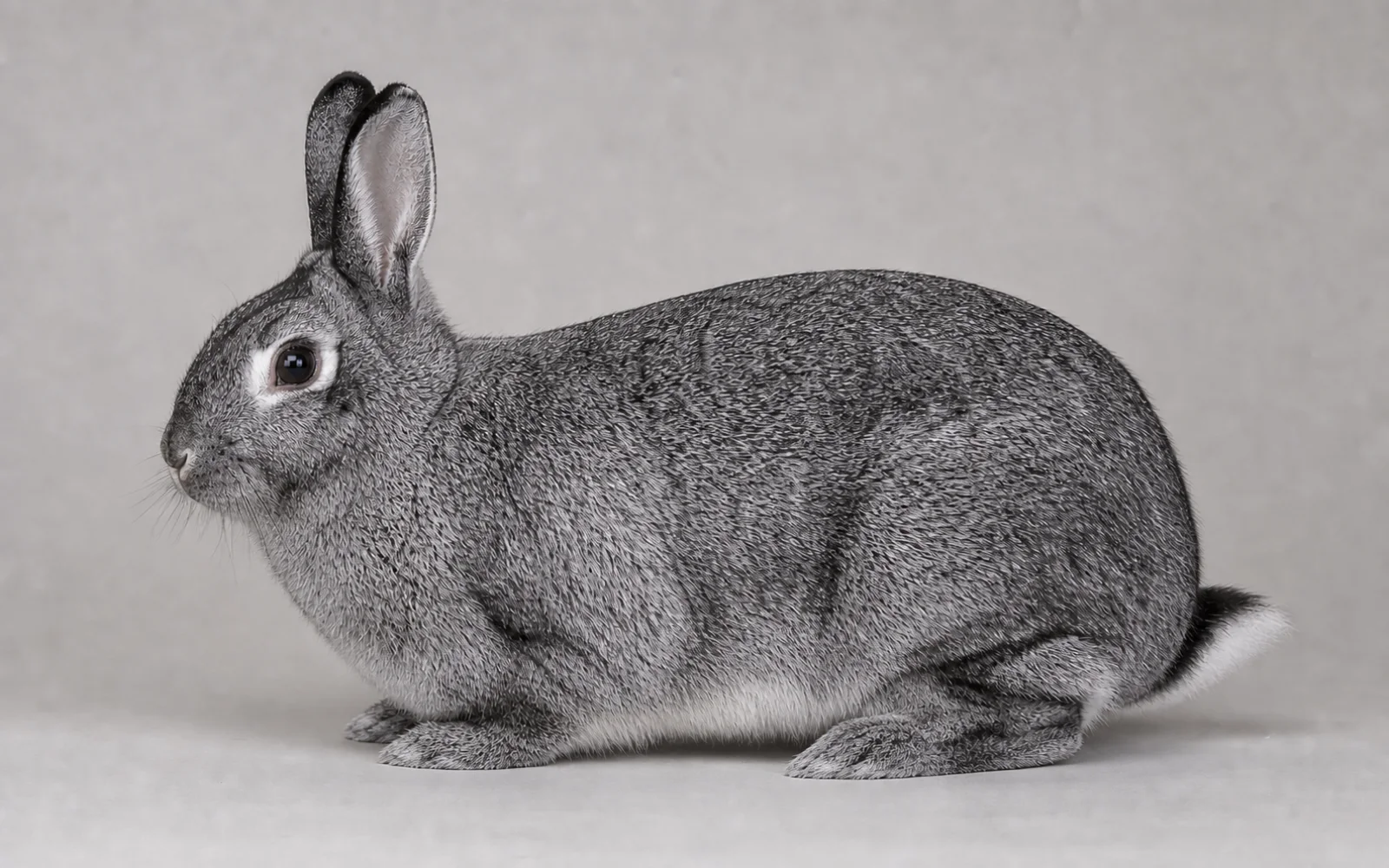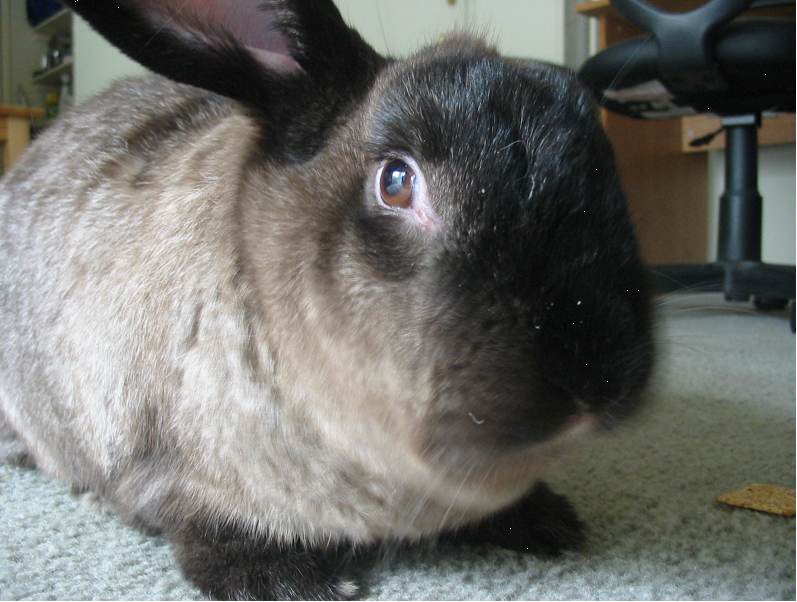
Origin and ARBA recognition
The National Mini Rex Rabbit Club traces the foundation to Monna Berryhill’s 1984 dwarf rex pair and a small Lynx Rex doe. A working standard was approved in 1986; ARBA’s breed page records full recognition in 1988. Those dates describe two different milestones, which is why sources that call 1986 the recognition year are incomplete.
Compact type, weight and rex coat
ARBA describes a compact, plush-coated rabbit with a maximum show weight of 4.5 lb (2.04 kg). The characteristic velvet feel comes from the rex coat structure, but texture, density, colour and body type must still be judged under the current registry standard. A soft coat alone cannot prove that an unpedigreed rabbit is a Mini Rex.
Temperament and suitability
Mini Rex rabbits are often described by keepers as curious and engaging, yet breed labels do not guarantee behaviour. Handling history, pain, hormones, social experience and housing matter. They still require enough continuous space to run, hop, rear up, hide and forage, plus compatible social contact; a compact body does not justify a compact life.
Feeding, grooming and flooring
Base the diet on continuously available suitable grass hay and fresh water, with appropriate leafy foods and measured complete pellets for life stage and condition. Remove loose coat gently, especially during moulting; aggressive brushing can damage the rex texture. Keep resting surfaces clean, dry, non-slip and comfortably supportive, and inspect the soles rather than relying on a breed stereotype.
Feet, teeth and evidence limits
Ulcerative pododermatitis is influenced by pressure, trauma, wet or dirty surfaces, flooring and other individual factors. The MSD manual discusses susceptibility in the larger Rex breed, not specifically Mini Rex, so it does not justify the database claim that every Mini Rex is “extremely prone.” Check feet, nails, gait, weight, appetite and droppings routinely; redness, hair loss, sores, reduced eating or reduced faeces require prompt veterinary assessment.
Responsible selection and records
Select for functional feet and movement, healthy teeth and breathing, stable temperament, body condition and a coat that meets the chosen registry standard without compromising welfare. Record parentage, matings, kindlings, live and stillborn kits, growth, adult weight, foot lesions, dental findings and the doe’s recovery. Litter size, meat yield and slaughter age are not fixed Mini Rex constants and should not be advertised as guarantees.
- Distinguish the 1986 working standard from full ARBA recognition in 1988.
- Do not breed animals with unexplained recurrent foot, dental or mobility problems before veterinary review.
- Use family health and adult outcomes, not coat softness alone, for selection.
Frequently asked questions
How big does a Mini Rex get?
ARBA sets a maximum show weight of 4.5 lb (2.04 kg). That is a registry limit, not a universal ideal weight; frame and body condition must be assessed individually.
Why does a Mini Rex feel like velvet?
Its rex coat has a distinctive relationship between guard hairs and undercoat that produces an upright, springy, plush surface. Coat feel alone does not establish pedigree.
Are Mini Rex rabbits guaranteed to get sore hocks?
No. Pododermatitis is multifactorial, and published veterinary guidance about Rex susceptibility should not be converted into certainty for every Mini Rex. Good surfaces and routine foot checks still matter.
When was the Mini Rex recognized?
The working standard was approved in 1986, while ARBA records full breed recognition in 1988. Both dates appear in reliable sources because they refer to different stages.
- Breed standardAmerican Rabbit Breeders Association — Mini Rex
- Breed standardNational Mini Rex Rabbit Club — breed history
- VeterinaryMSD Veterinary Manual — Disorders and Diseases of Rabbits
- Animal welfareRSPCA — What should I feed my rabbits?
- Animal welfareRSPCA — How to keep rabbits healthy
- Animal welfareRSPCA — The ideal home for rabbits
- VeterinaryMSD Veterinary Manual — Management of Rabbits
- VeterinaryMSD Veterinary Manual — Nutrition of Rabbits
- VeterinaryMSD Veterinary Manual — Routine Health Care of Rabbits
This evidence profile cannot diagnose an individual rabbit or replace a rabbit-experienced veterinarian. Registry standards can change; verify the current standard before breeding or showing.