A worldwide old breed with no proven Himalayan birthplace
ARBA notes a first European description in 1857 and exhibition in Great Britain by the late 1800s. The American Himalayan Rabbit Association calls the history vague, says no solid proof locates the origin in the Himalayan region and records more than twenty historical names, including Russian, Chinese and Egyptian forms. The American specialty association itself was chartered in 1931. The responsible conclusion is therefore “old and widely distributed, exact origin unknown,” not the database’s confident China/Tibet attribution.
Pointed white, four ARBA colors and a level cylindrical body
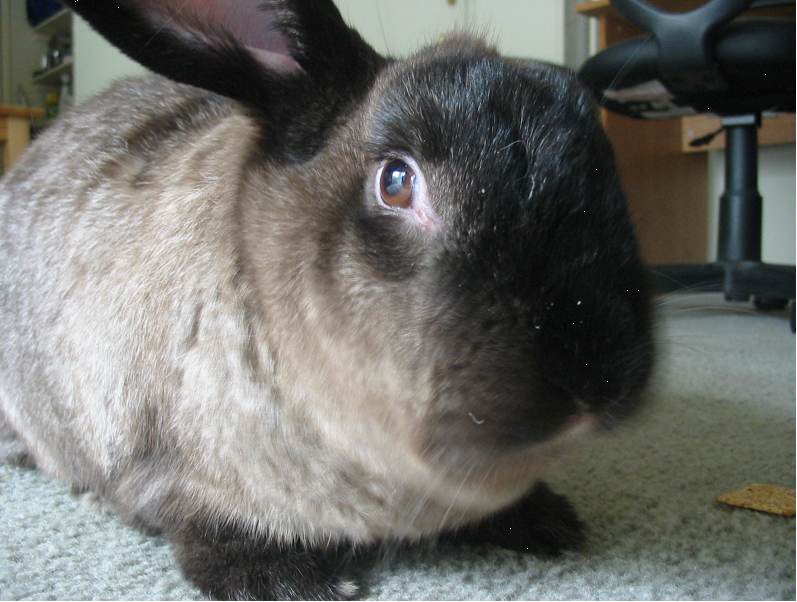
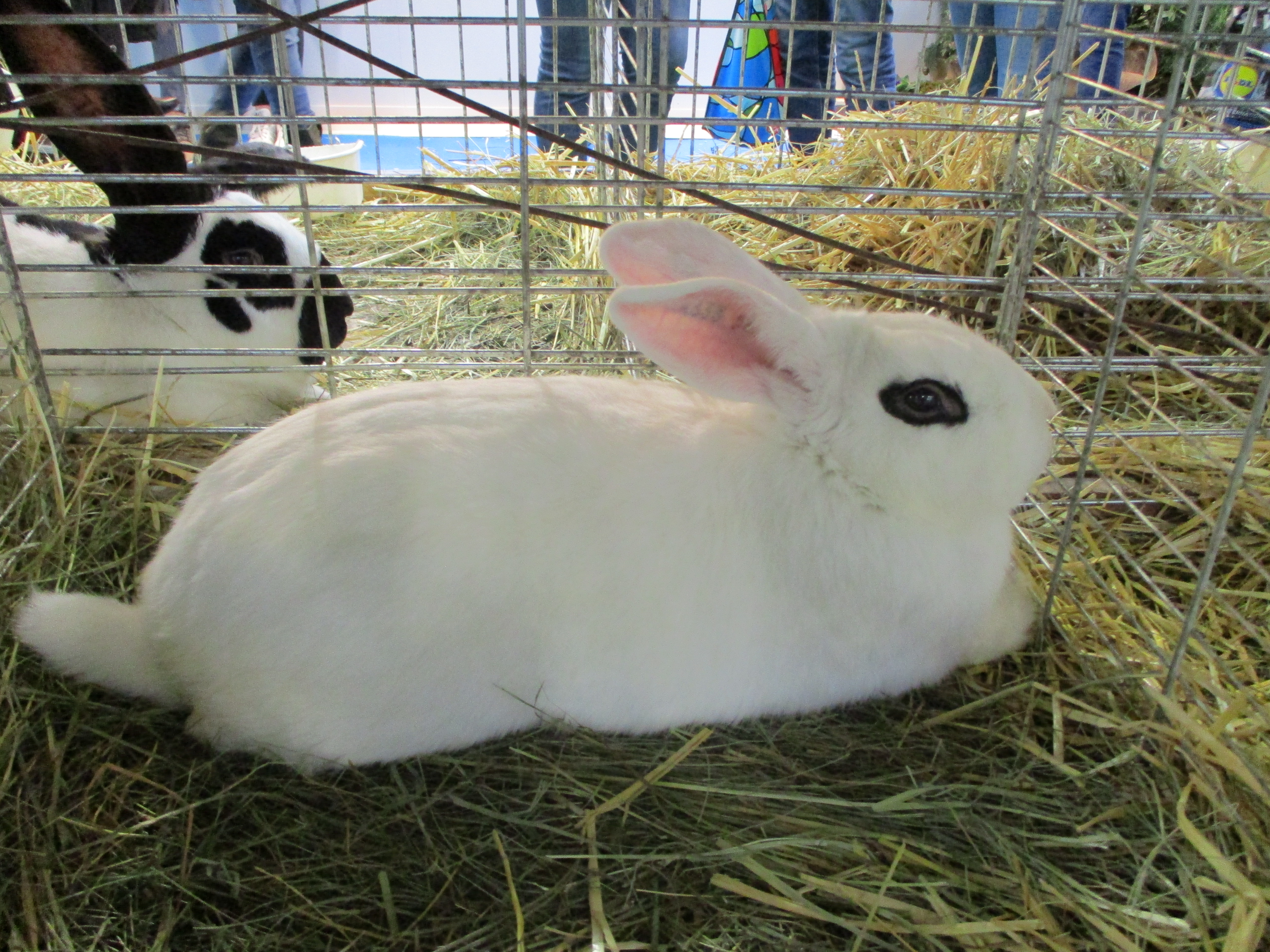
ARBA publishes a maximum of 4.5 lb (2.04 kg), while its current Breed ID Guide recognizes Black, Blue, Chocolate and Lilac. The body is white, with color on the nose, ears, feet and tail. The classic show pose is elongated and level, with no commercial-style rise over the hips. Older ARBA material called Himalayan the only cylindrical breed, but the current recognized-breed list also describes Czech Frosty and Blue Holicer as cylindrical, so that superlative is obsolete. The 2021 TYR study associates p.E294G with the Himalayan allele and temperature-dependent pigment at cooler body extremities. Similar pointed-white color appears in other breeds and crosses.
A registry reputation is not a guarantee for every rabbit
ARBA describes the breed as laid back and easy to handle, which is useful historical breed context but not a behavioral guarantee. Pain, fear, hormones, early experience, social contact and housing can change behavior. Provide hiding places, foraging, predictable routines and compatible rabbit companionship. Work at floor level and use reward-based habituation. Children need direct adult supervision and should not carry a rabbit. If lifting is necessary, support the chest and complete hindquarters; a sudden behavior change needs a health review.
Small size still requires permanent exercise space
A 2 kg show maximum does not justify compact confinement. Provide a permanently connected enclosure and exercise area for several full hops, upright standing, complete stretching, turning, exploring and retreating. Use dry, stable, non-slip flooring. Feed unlimited grass hay and constant fresh water, with suitable leafy greens and a measured complete pellet adjusted for age, body condition and reproduction. Monitor appetite, feces, weight, teeth, nails, feet, eyes, coat and movement. Manage ambient temperature for welfare, not to manipulate point color; all rabbits can suffer heat stress.
Temperature-sensitive pigment is not a disease diagnosis
The Himalayan allele changes pigment production through TYR and local temperature; it does not by itself diagnose illness or prove that the breed has unique immunity. A changing point shade can reflect coat cycle and temperature, but new skin lesions, hair loss, swelling or pain still need examination. Apply standard rabbit prevention for dental disease, gastrointestinal slowdown, obesity, parasites, respiratory disease, heat stress and sore feet. Reduced eating or feces, diarrhea, abdominal swelling, breathing difficulty, head tilt, marked lethargy or pain requires prompt rabbit-experienced veterinary care.
Select the whole animal, not just dark points
Use the current standard and complete pedigrees. Record variety, point definition, body-white cleanliness, eye and nail color, mature weight, level cylindrical structure, movement, bite, feet, matings, every birth and loss, growth and doe recovery. Temperature can alter visible pigmentation, so compare animals in known conditions and never infer genotype from a single photograph. The TYR evidence explains the allele but does not guarantee show markings or pedigree. Select health and function before darker points. No reviewed source validates a fixed litter of five, universal child suitability or a standard production cycle.
- Record variety, point development and the conditions in which color was assessed.
- Keep structure, bite, feet, births, losses, growth and maternal recovery together.
- Do not use point color alone to identify breed, genotype or health.
Frequently asked questions
How much does a Himalayan rabbit weigh?
ARBA’s public breed page gives a maximum of 4.5 lb, about 2.04 kg. Consult the current full standard for age classes and ideal show weights.
Where did the Himalayan rabbit originate?
The exact origin is not proven. The specialty club rejects certainty about a Himalayan birthplace; a European description is documented in 1857.
Why do Himalayan rabbit points change shade?
The Himalayan TYR allele is temperature-dependent, allowing more dark pigment in cooler extremities. Coat cycle and environment can therefore affect visible shade.
Is Himalayan still ARBA’s only cylindrical breed?
No. That statement remains on an older breed page, but ARBA has since recognized cylindrical Czech Frosty and Blue Holicer populations.
- Breed standardAmerican Rabbit Breeders Association — Himalayan
- Breed standardAmerican Himalayan Rabbit Association — Breed history
- Breed standardARBA — Current recognized rabbit breeds
- Breed standardARBA Domestic Rabbits — Proper posing and evaluation
- Breed standardARBA — Rabbit Breed ID Guide (January 2026)
- Peer reviewedItalian Journal of Animal Science — TYR variability and the Himalayan coat allele in rabbits (2021)
- VeterinaryMSD Veterinary Manual — Noninfectious Diseases of Rabbits
- Animal welfareRSPCA — What should I feed my rabbits?
- Animal welfareRSPCA — How to keep rabbits healthy
- Animal welfareRSPCA — The ideal home for rabbits
- VeterinaryMSD Veterinary Manual — Management of Rabbits
- VeterinaryMSD Veterinary Manual — Nutrition of Rabbits
- VeterinaryMSD Veterinary Manual — Routine Health Care of Rabbits
This profile does not authenticate pedigree, infer genotype from color or diagnose a skin or medical condition. Use the current registry standard and a rabbit-experienced veterinarian.