A British patterned breed with a disputed US arrival date
ARBA places development in nineteenth-century England and says English Spots appeared in the United States in 1890. The American specialty club describes development in late nineteenth-century England, records the National English Rabbit Club and formalized markings in 1891, and says its own US organization was founded in 1924. However, the club also quotes a 1975 guidebook that places the breed in America by 1910. These accounts may use different meanings of first appearance, importation or organized exhibition. With no primary import record supplied, this profile preserves the conflict rather than converting either date into certainty. The old database’s exact 1850 origin is correspondingly too precise.
Full arch, free movement and a coordinated pattern
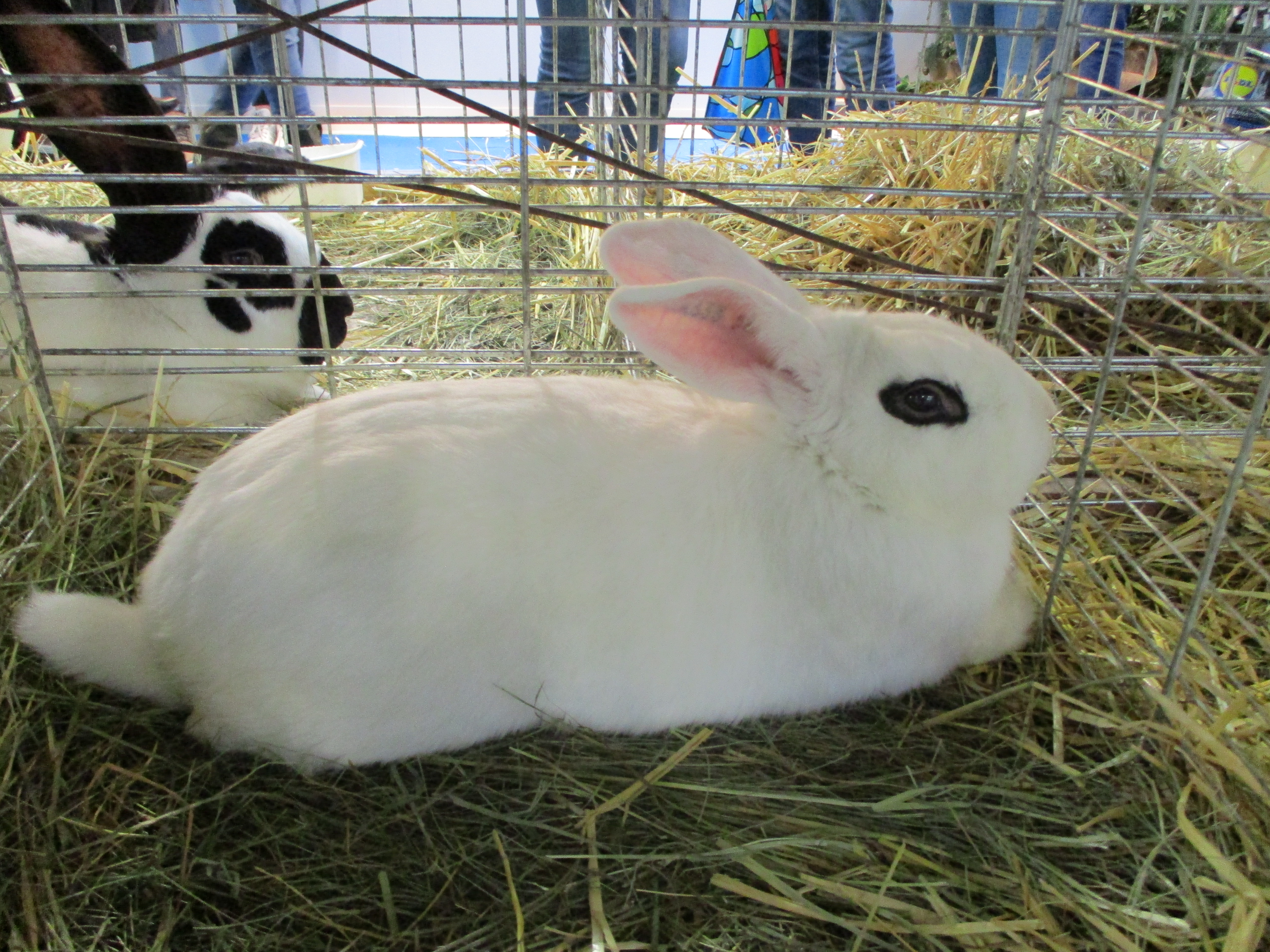
The club standard calls for a full-arched rabbit carried clear of the table and able to run freely. The pattern includes a butterfly on the nose, complete eye circles, cheek spots, colored ears, a herringbone stripe from ear base to tail and two balanced chains of side spots sweeping toward the hindquarters. ARBA caps show weight at 8 lb (3.63 kg). Its January 2026 guide lists Black, Blue, Chocolate, Gold, Gray, Lilac and Tortoise as showroom colors; additional tortoise color labels may appear in registration records. A spotted coat or one butterfly marking does not establish pedigree or show quality, and photo appearance cannot replace the current standard.
Running is a judging instruction, not a personality diagnosis
ARBA and the club use running to describe how the full arch is displayed: the rabbit is assessed in motion rather than compressed into a posed commercial body. That supports providing generous movement space, but it cannot prove that every English Spot is highly energetic, easily startled, friendly or docile. Judge the individual’s pain, fear, socialization and handling history. Work at floor level, reward voluntary approach and never chase for routine contact. When lifting is necessary, support the chest and hindquarters. Provide hiding places, foraging, predictable routines and compatible rabbit companionship, adapting management to observed body language instead of database stereotypes.
Protect movement, digestion and a clean short coat
Provide a permanently connected, dry, non-slip area long and high enough for running, successive hops, upright rearing, turning, full stretching, exploration and retreat. The short normal coat needs routine inspection and extra loose-hair removal during moulting, not intensive angora grooming; check the tail, underside and stained areas without bathing the whole rabbit. Base nutrition on unlimited grass hay, constant fresh water, suitable leafy greens and measured complete pellets adjusted for age, growth, reproduction and body condition. Monitor weight and condition rather than feeding toward the show maximum. Daily appetite and droppings are essential observations, especially in a patterned line with known intestinal-genetics concerns.
English spotting can carry a serious intestinal consequence
A 2014 KIT study of the English spotting locus found heterozygous En/en rabbits normally patterned, en/en rabbits self-colored and homozygous En/En animals nearly white—the phenotype breeders often call “Charlie.” In the studied Checkered Giant population, En/En was subvital and associated with dilated cecum and colon. A clinical review also describes a congenital progressive sodium-transport disorder in homozygous spotted English Spot and Checkered Giant rabbits and notes that “megacolon” primarily involves the cecum. These findings make the risk more than cosmetic, while not diagnosing every lightly marked rabbit by sight. Seek a rabbit-experienced veterinarian for reduced appetite or feces, abnormal feces, poor growth, abdominal distension, pain, weakness or lethargy.
Plan genotype and welfare before optimizing the chain of spots
Use verified pedigrees, the current standard and line records. Track mature weight, arch and movement, all pattern elements and color, bite, teeth, feet, body condition, handling response, digestive history, matings, every birth and loss, kit growth and doe recovery. At the English spotting locus, pattern-to-pattern breeding can produce En/En offspring with a serious welfare risk; the theoretical Mendelian 1:2:1 expectation is not a promise for each litter and should never be marketed as exact output. Do not identify genotype from one photograph or call every mostly white kit diseased—use pedigree, outcomes and testing where available. No reviewed source validates a universal litter of six or a fixed 16-week breeding or market age.
- Treat pattern-to-pattern pairing as a health decision, not only a color decision.
- Record every kit, including self-colored, normally patterned and mostly white offspring.
- Select sound digestion, growth, movement and temperament before pattern perfection.
Frequently asked questions
How much does an English Spot rabbit weigh?
ARBA publishes a maximum show weight of 8 lb (3.63 kg). It is a judging ceiling, not a target for feeding or proof of breed identity.
When did the English Spot reach the United States?
The official sources conflict: ARBA says 1890, while a history reproduced by the US specialty club says the breed was in America by 1910. The club itself was founded in 1924.
What markings define an English Spot?
The coordinated pattern includes a butterfly nose marking, eye circles, cheek spots, colored ears, a herringbone spine stripe and balanced side chains. Random spotting alone does not prove the breed.
What is a Charlie English Spot, and is megacolon real?
Breeders often call a nearly white En/En homozygote a Charlie. Peer-reviewed research links that genotype to a congenital intestinal disorder, but visual appearance alone is not a diagnosis; use records, testing and veterinary assessment.
- Breed standardAmerican Rabbit Breeders Association — English Spot
- Breed standardAmerican English Spot Rabbit Club — English Spot breed history
- Breed standardAmerican English Spot Rabbit Club — English Spot standard
- Breed standardARBA — Rabbit Breed ID Guide (January 2026)
- Peer reviewedPLoS ONE — KIT, English spotting and congenital megacolon (2014)
- Peer reviewedVeterinary Clinics — Gastrointestinal Diseases of Rabbits (2020)
- VeterinaryMSD Veterinary Manual — Noninfectious Diseases of Rabbits
- Animal welfareRSPCA — What should I feed my rabbits?
- Animal welfareRSPCA — How to keep rabbits healthy
- Animal welfareRSPCA — The ideal home for rabbits
- VeterinaryMSD Veterinary Manual — Management of Rabbits
- VeterinaryMSD Veterinary Manual — Nutrition of Rabbits
- VeterinaryMSD Veterinary Manual — Routine Health Care of Rabbits
This profile does not diagnose genotype or intestinal disease and does not replace the current ARBA or national standard. Discuss breeding and health decisions with a rabbit-experienced veterinarian.